Yozakura in Japan: why cherry blossoms feel different after dark
Yozakura means viewing cherry blossoms at night, when light, crowds, food, and shadows change the mood of sakura season.
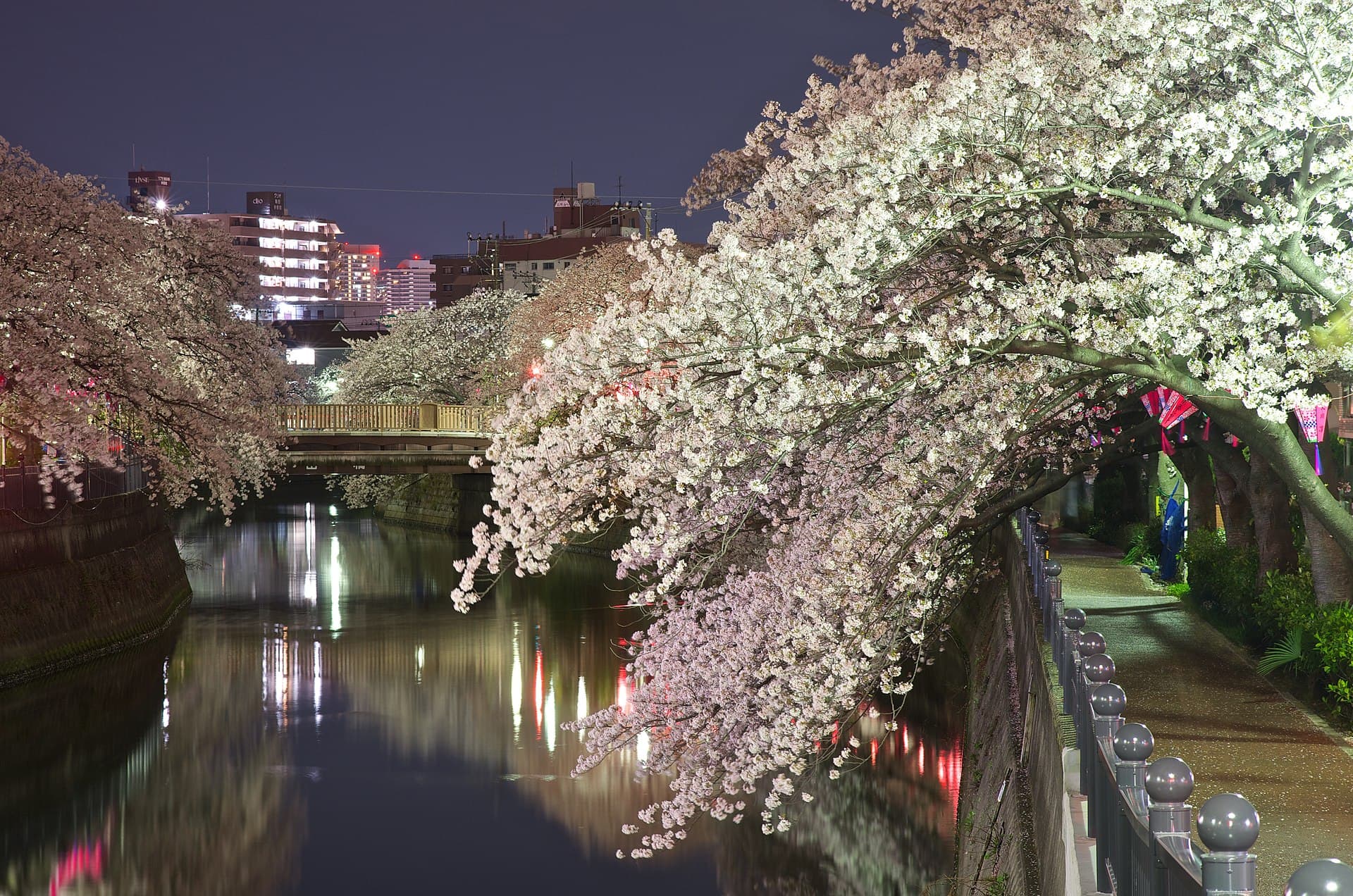
Yozakura means nighttime cherry blossom viewing, and it changes the feeling of sakura season completely. The same trees that look soft and airy in daylight can feel dramatic, quiet, or almost theatrical once lanterns and city lights take over.
What yozakura means
The word yozakura combines yo, night, with sakura, cherry blossoms. It does not describe a different flower. It describes a different way of seeing the same seasonal moment. A park, riverbank, or castle moat can feel familiar in the afternoon and completely transformed after dark.
This shift matters because cherry blossom season is already short. People often try to catch more than one version of it: morning blossoms, picnic blossoms, blossoms in rain, and blossoms lit at night. Yozakura is one of the most memorable versions because light makes the petals stand out against darkness.
Why the atmosphere changes after dark
At night, the blossom viewing experience becomes less about clear color and more about contrast. Lanterns, reflections, food stalls, silhouettes, and river water all change how the trees feel. The mood can become festive in a busy park or surprisingly calm along a quieter path.
Crowds also behave differently. Daytime hanami often centers on picnics and open space. Yozakura can be more like a slow walk, a date, an after-work stop, or a small detour on the way home. The blossoms become part of the evening rather than a full-day event.
What learners can notice
Yozakura is a good example of how Japanese often names a precise seasonal angle. The word does not need a long explanation once you know its parts. It tells you the object, the time, and the expected mood in a compact form.
When you see yozakura in travel listings, posters, or local event pages, look for nearby words too: light-up, lanterns, river, park, festival, limited time. The vocabulary around the word reveals how strongly season, place, and timing are linked in Japanese culture.