Mochi guide: What Japan's rice cake reveals about ritual, season, and texture
Soft, sticky, and seasonal, mochi appears at New Year, festivals, and daily snack counters — each version carrying a different layer of meaning.
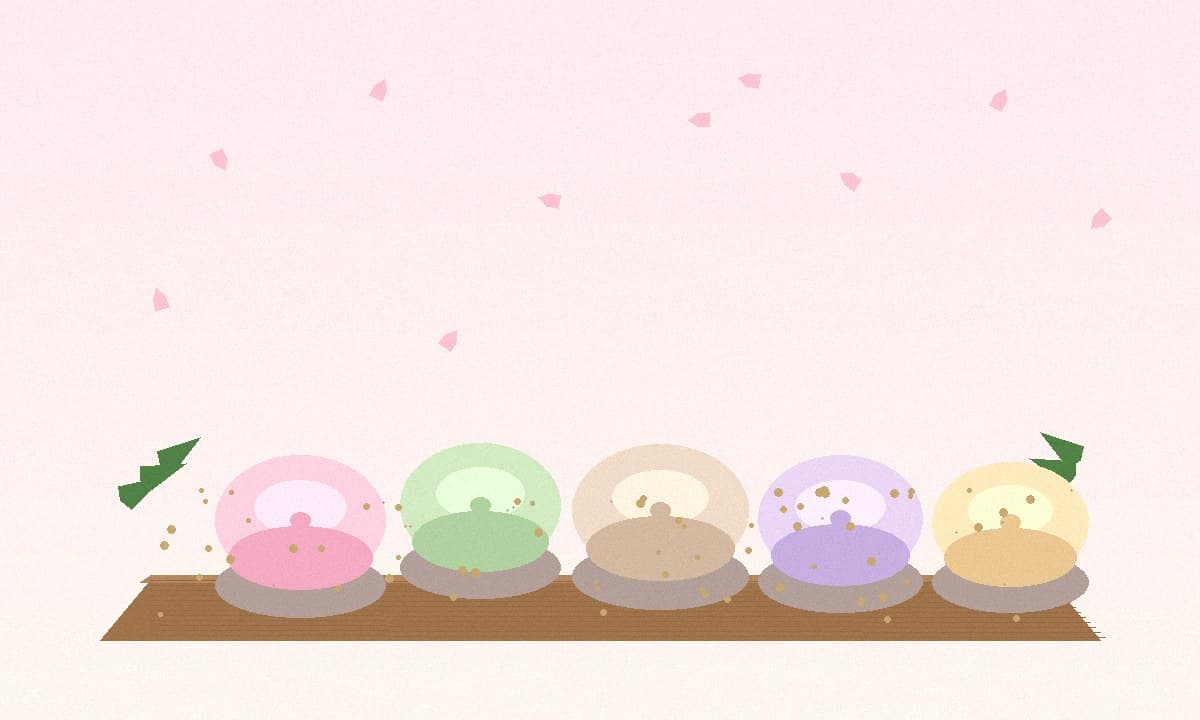
Mochi is one of the oldest foods in Japan and one of the most varied. The same basic ingredient—pounded glutinous rice—becomes festive decoration, casual snack, and high-ceremony confection depending entirely on context.
What mochi is and how it is made
Mochi begins with mochigome, a short-grain glutinous rice that becomes extremely sticky and elastic when cooked and pounded. The traditional method—mochitsuki—involves two people at a wooden mortar (usu): one pounds with a heavy mallet (kine), the other turns and wets the rice between each stroke. The rhythm must be fast and synchronized, and the result is a smooth, dense, elastic mass quite unlike ordinary cooked rice.
Today most commercial mochi is machine-made, but the mochitsuki ritual continues at shrines, community centers, and households every December. The act of making mochi together carries ceremonial weight that is separate from the eating. It is a performance of community, precision, and timing—values that appear in many other Japanese traditional practices.
How mochi changes across seasons and occasions
At New Year, mochi appears as kagami mochi: two round cakes stacked on a lacquer stand with a bitter orange on top, placed on the household altar as an offering to the new year's deity. Ozōni, the regional New Year soup, typically contains mochi and varies in shape, broth, and accompaniments depending on where in Japan you eat it. This regional variation alone is worth exploring as a map of Japanese geography.
Throughout the year, mochi takes different forms. Daifuku wraps sweet red bean paste in a soft mochi skin. Sakura mochi, pink and cherry-flavored, wrapped in a pickled sakura leaf, arrives in spring. Kusa mochi, colored green with mugwort, appears in early summer. Botamochi and ohagi use the same basic combination—mochi and red bean—but are named differently depending on the season. Each variety marks a moment in the calendar more precisely than a date.
Why texture is so central to Japanese food culture
Mochi's defining quality—chewy, stretchy, slightly resistant—is precisely what makes it beloved. Japanese food culture pays close attention to texture (shokkan) in a way that is easy to underestimate. Crispy, soft, slippery, crunchy, and chewy are each considered distinct pleasures rather than simple contrasts between good and bad. Mochi occupies a unique place in this system because its texture is extreme: nothing else quite replicates it.
Recognizing this helps learners understand why Japanese food descriptions lean so heavily on texture words, why the same ingredient reappears in very different forms across the year, and why seasonal changes in food are taken so seriously. Mochi is a clear example of how a single ingredient becomes a system for marking time, occasion, and care—which is exactly the kind of cultural logic that language learning benefits from noticing.