Tanabata festival in Japan: Why people write wishes on paper strips
How the Tanabata festival works in Japan, why wishes are written on colorful paper, and what makes the celebration feel both public and personal.
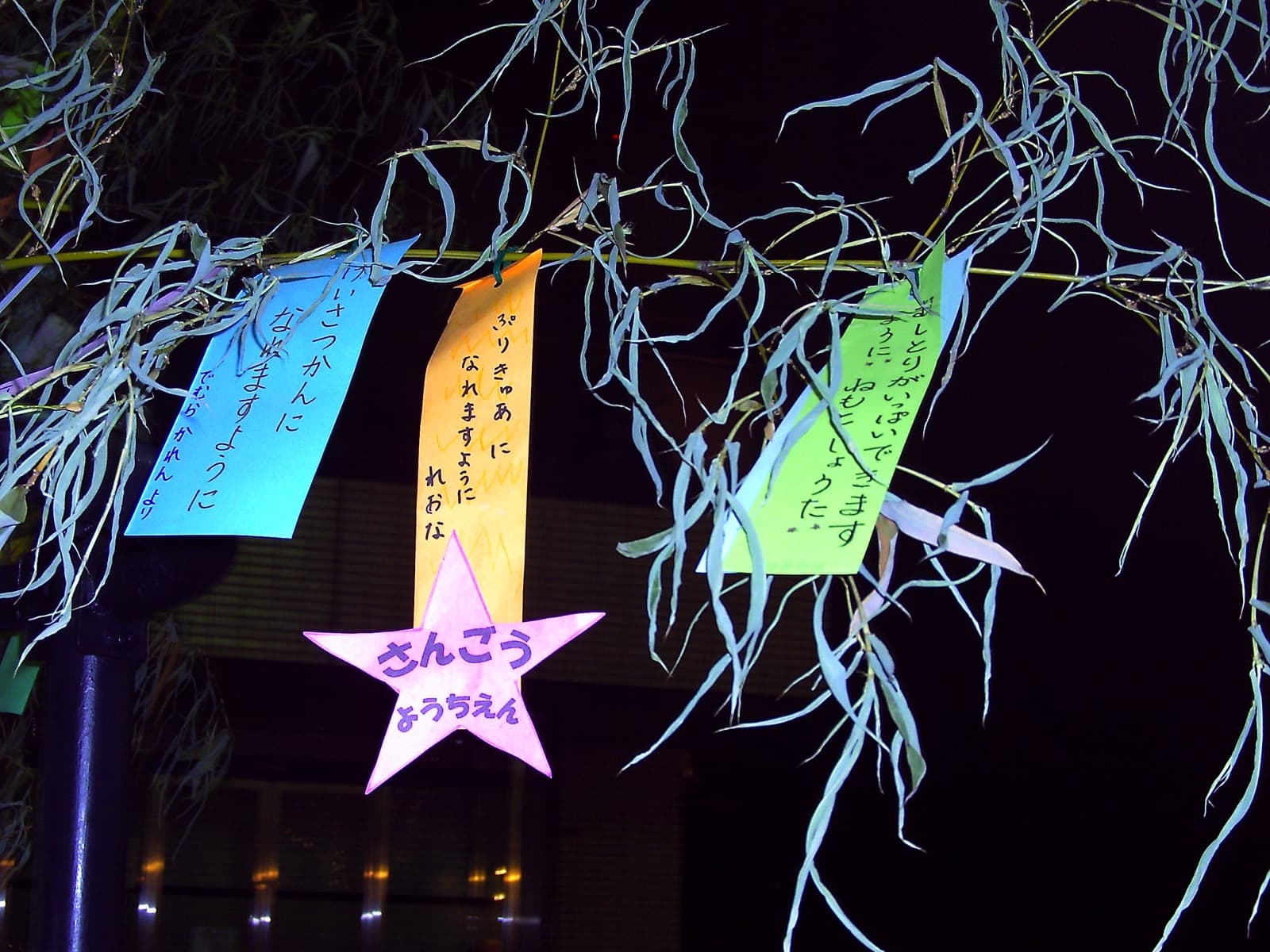
The Tanabata festival in Japan is memorable because it turns a private hope into a visible object. A wish is written, hung in public, and folded into a street full of color, story, and seasonal atmosphere.
Why people write wishes during Tanabata
Tanabata is tied to the story of two stars, Orihime and Hikoboshi, who are allowed to meet only once a year. That romantic story gives the festival its emotional frame, but the practice people remember most is writing wishes on narrow paper strips called tanzaku. The act is simple, but it turns hope into something concrete and shareable.
That public quality matters. A wish can be private in meaning while still hanging among hundreds of others. The result feels personal and collective at the same time. That balance is one reason the Tanabata festival in Japan remains so visually striking and emotionally accessible.
How decoration changes the whole street
Tanabata decorations often fill shopping arcades, school spaces, and neighborhood streets with long streamers, bright paper, and movement overhead. The festival does not only happen at eye level. It changes the ceiling of the street, making ordinary routes feel temporarily theatrical and seasonal.
This is where Tanabata becomes more than a legend explained on a sign. The visual density creates a shared mood. People look up, slow down, and read the environment differently. The festival teaches how decoration can reshape public space without needing permanent architecture.
Why the festival is easy to remember
For beginners, Tanabata is one of the easiest Japanese festivals to remember because the core image is so clear: a written wish hanging in a decorated public place. You do not need deep background knowledge to understand why that feels meaningful. The ritual explains itself quickly through action and color.
At the same time, it reveals a larger pattern in Japanese seasonal culture. Feelings are often expressed through small formal acts, and public spaces are used to hold those acts gently rather than loudly. The Tanabata festival in Japan makes that pattern visible in one of the most approachable ways.