What is a yokocho in Japan? Why narrow alleys feel more personal than a food district
What a yokocho in Japan actually is, why these alleys became so iconic, and how their tight scale changes the way people eat, drink, and talk.
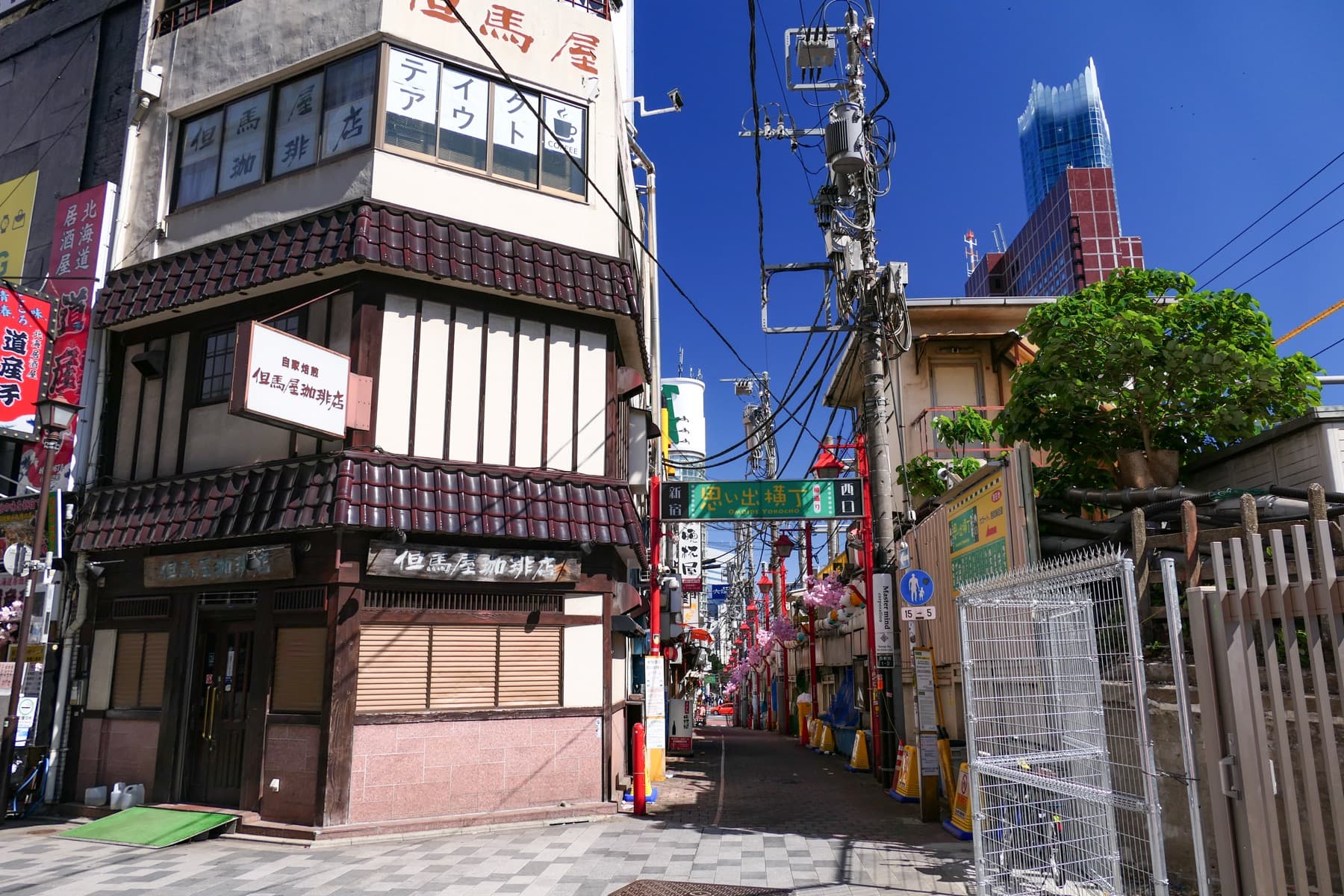
A yokocho in Japan can look like a tourist image at first: glowing signs, smoke, narrow passages, and tiny counters pressed close together. But the reason people remember a yokocho is not only the lighting. It is the compression. The alley shrinks distance between strangers, food, staff, and sound, so the whole place feels more conversational than anonymous.
Why a yokocho feels different from an ordinary restaurant area
The easiest way to describe a yokocho is as a narrow lane lined with compact places to eat and drink, often with very little space separating one establishment from the next. But that definition misses the emotional effect. In a normal restaurant district, the street can still feel anonymous. In a yokocho, the small scale pushes everything closer together: menus, stools, smoke, voices, and the person cooking just a few feet away.
That proximity changes behavior. You are more aware of other customers, more likely to hear several conversations at once, and more likely to choose a place based on mood rather than branding. A yokocho is not only a set of businesses. It is a spatial format that produces a specific kind of social atmosphere.
Why these alleys became so memorable in Japan
Many famous yokocho are associated with postwar urban history, practical use of limited space, and a style of nightlife built around small operators rather than large venues. Even when an alley is cleaned up, rebuilt, or partially stylized for visitors, it often carries the memory of tighter budgets, local regulars, and everyday drinking culture rather than polished destination dining.
That memory is part of the appeal. People do not go to a yokocho only for food quality. They go for texture. The signs feel layered, the seating feels improvised, and the alley feels like a preserved urban fragment that resisted being flattened into something generic.
What yokocho teaches you about Japanese city life
A yokocho shows that urban intimacy does not always require quiet or spaciousness. In Japan, closeness can come from carefully managed density. The alley is crowded, but its size forces a kind of mutual awareness. You notice how people enter, wait, order, and make room for one another. The social choreography is small, but it is constant.
For language learners, yokocho are revealing because they concentrate casual spoken Japanese in a physically compressed setting. You hear quick greetings, menu explanations, short back-and-forth exchanges, and bits of regular-customer conversation. The alley becomes a lesson in how atmosphere, architecture, and speech style support each other.