Wisteria season in Japan: why fuji flowers feel so theatrical
A guide to Japanese wisteria season, from fuji flower tunnels to shrine symbolism, seasonal timing, and vocabulary learners can remember.
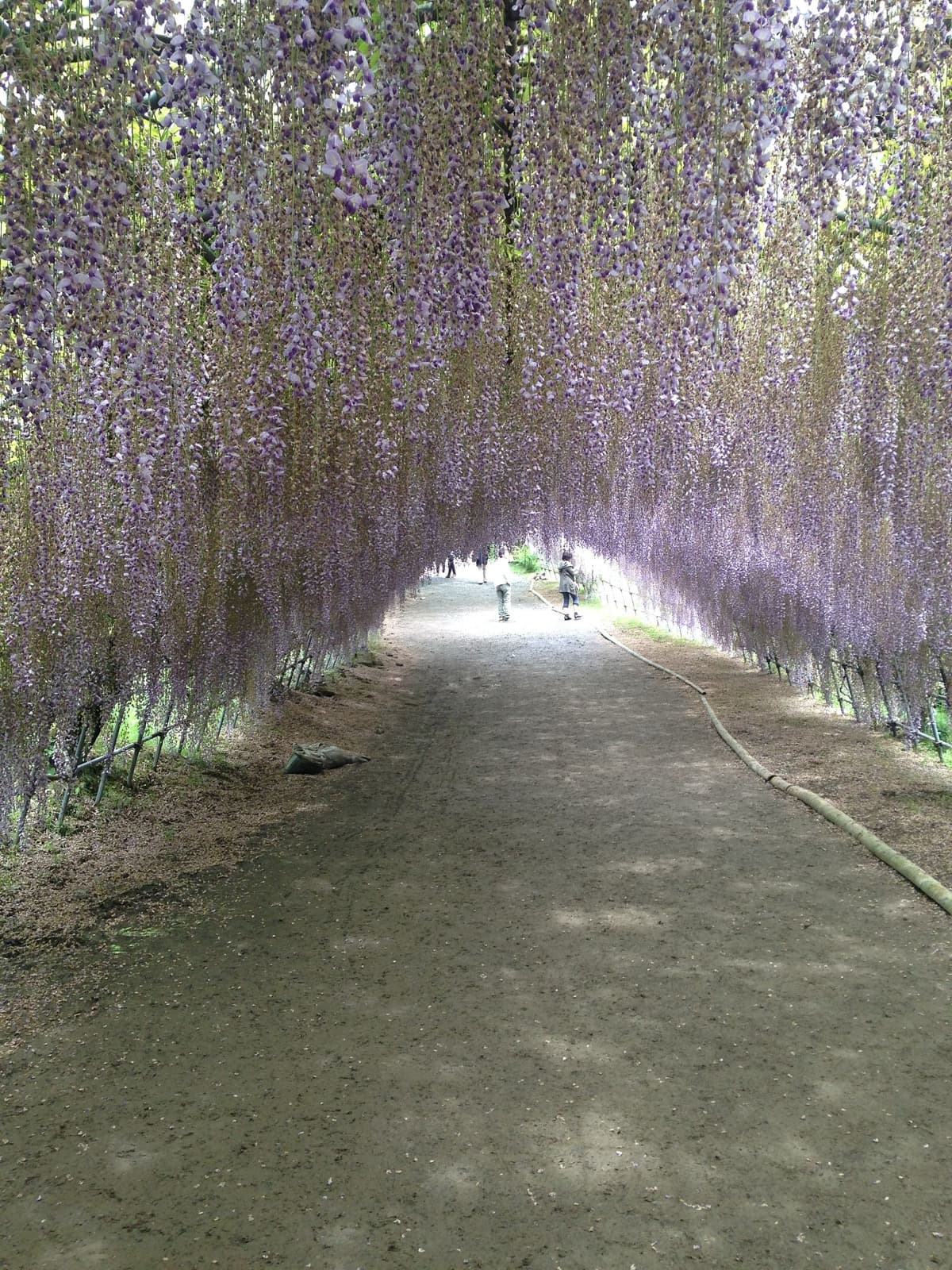
Cherry blossoms get the loudest attention, but wisteria changes the mood of spring in a different way: it hangs overhead, deepens the color of a space, and turns walking into looking up.
What makes wisteria different from cherry blossoms
Wisteria season arrives after the first rush of cherry blossoms in many parts of Japan. The mood is different. Sakura feels fragile and open to the sky, while wisteria hangs in long clusters from trellises, creating shade, color, and a sense of enclosure.
That physical difference changes how people experience the flowers. Instead of looking across a park or up at branches, visitors often walk beneath the blooms. The flower becomes an environment, not only a view.
Why fuji appears in culture and design
The Japanese word for wisteria is fuji. It appears in poetry, family crests, kimono patterns, and garden design. The flower's long drooping shape makes it easy to stylize, and its purple tones carry a refined, slightly formal atmosphere.
Wisteria also has strong associations with famous places and shrine landscapes. A trellis covered in flowers can frame a path, soften architecture, or make a seasonal visit feel ceremonial without requiring a loud festival.
How wisteria tunnels became iconic
Wisteria tunnels are popular because they turn seasonality into movement. The visitor does not simply stand before flowers. They pass through a corridor of hanging color, with light filtering between blossoms and leaves.
That makes the image especially memorable online, but the effect is not only photogenic. The tunnel slows the walk and changes the direction of attention. People look up, pause, and notice how the same plant can shift from individual blossoms to an entire ceiling of spring.
What learners should remember
For Japanese learners, wisteria is a compact seasonal keyword. Fuji can lead to plant vocabulary, color words, garden terms, and cultural references. It also shows that spring in Japan is not only sakura.
DarumaGo treats topics like this as memory anchors. A hanging purple tunnel is easier to remember than an isolated word, and that image can carry several useful pieces of Japanese language and culture at once.