What is maneki-neko in Japan? Meaning, symbolism, and why the lucky cat is everywhere
A simple guide to maneki-neko in Japan, from raised paws and coin imagery to why the lucky cat still appears in shops, homes, and everyday streets.
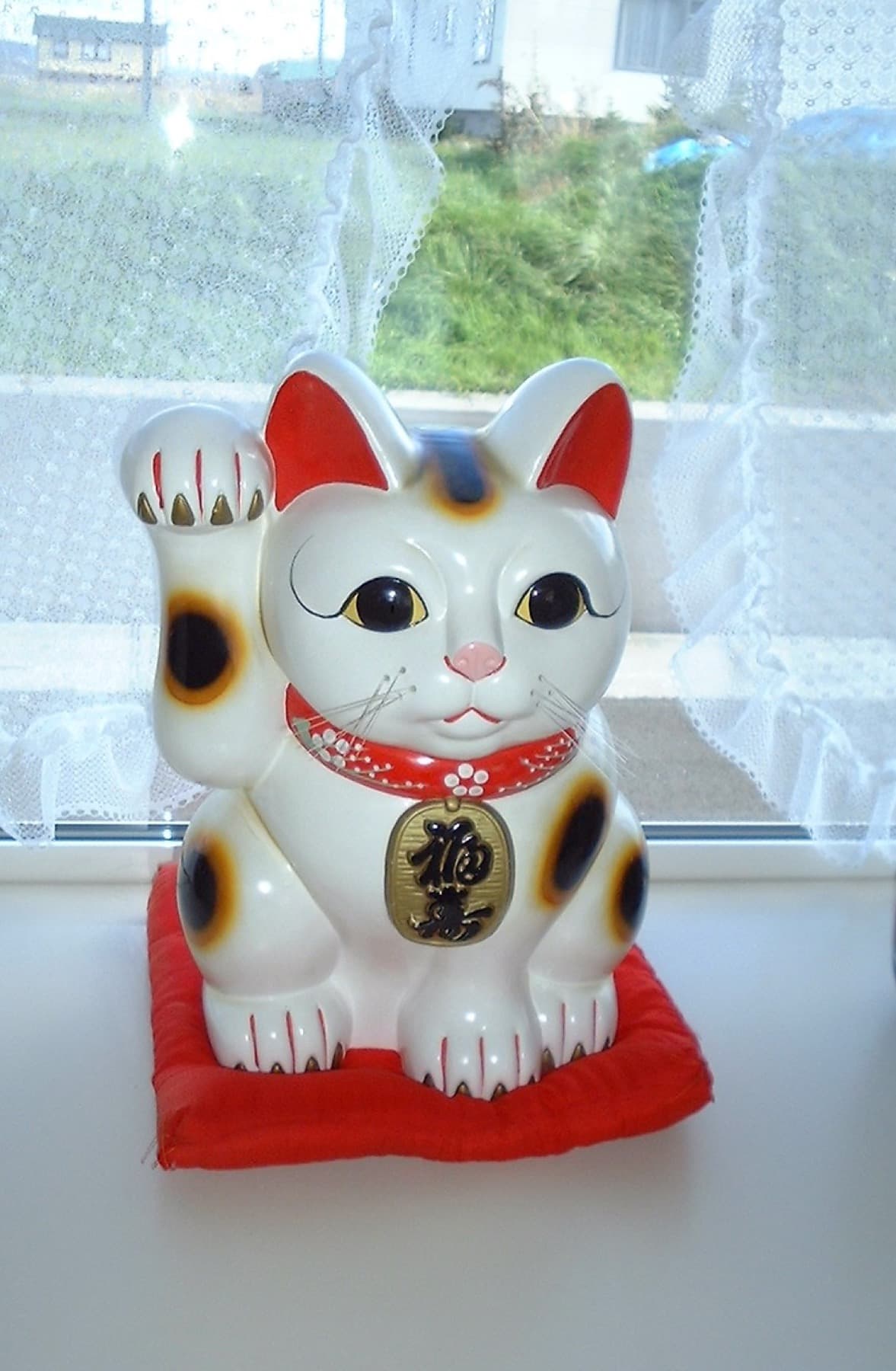
Maneki-neko is easy to dismiss as a souvenir until you start noticing how often it appears in ordinary places. The lucky cat sits in shop windows, restaurant counters, temple districts, and local businesses because it condenses a familiar Japanese hope: attracting customers, safety, and steady fortune without turning luck into something loud.
Why the raised paw matters
The most recognizable detail of maneki-neko is the lifted paw. In the simplest reading, the cat is inviting luck inward. That gesture makes the figure feel active rather than decorative, as if good fortune is being called into the room instead of passively awaited.
Different versions add nuance. Some people associate one paw with attracting customers and the other with inviting money or general luck. The exact interpretation can vary, but the broader idea stays stable: prosperity is imagined as something that can be welcomed through a visible sign.
Why shops keep using maneki-neko
One reason maneki-neko remains so common in Japan is that it fits naturally inside small business culture. A neighborhood cafe, ramen shop, or beauty salon can display one without making the place feel theatrical. It reads as friendly, hopeful, and familiar rather than overly superstitious.
That matters because Japanese storefronts often communicate mood through small signals. A noren curtain, a handwritten menu board, or a lucky cat near the register can all suggest welcome. Maneki-neko works well in that setting because it combines symbolism with warmth.
What the lucky cat reveals about everyday Japan
Maneki-neko is useful for understanding how Japanese symbolism often stays embedded in ordinary routines. It is not locked away as a rare museum object. It keeps showing up where people buy lunch, enter a station arcade, or pay at a corner shop. That everyday repetition is part of its power.
For beginners, the lucky cat is a good example of how cultural meaning can stay approachable. You do not need deep religious knowledge to understand why it appeals. It offers a compact image of welcome, continuity, and practical hope, which is why it still feels current in modern Japan.