Kintsugi in Japan: Why golden repair became a cultural metaphor
A practical guide to kintsugi, the Japanese repair tradition that makes broken pottery visible instead of hiding the damage.
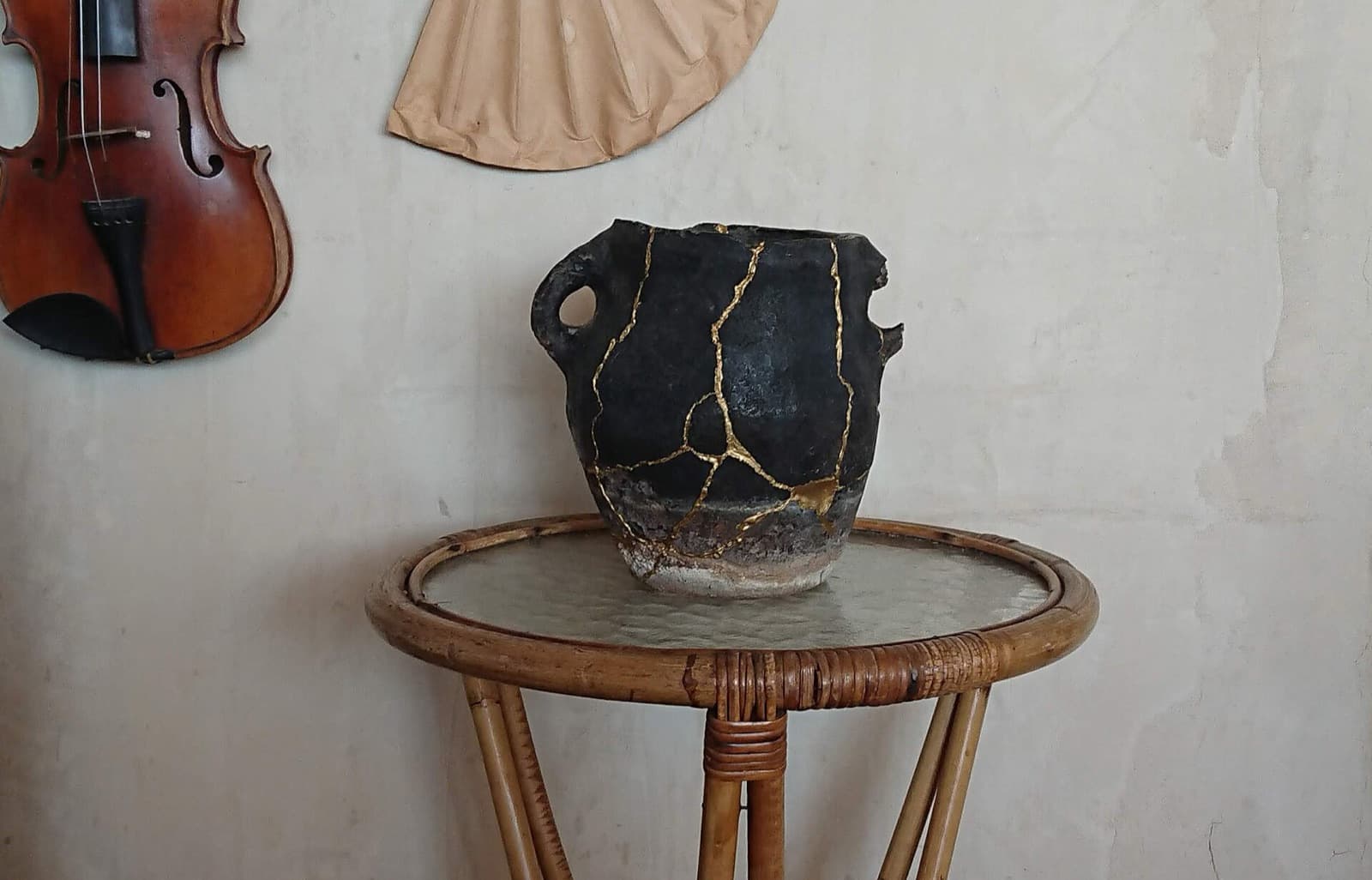
Kintsugi is often summarized as repairing broken pottery with gold, but the real cultural weight sits in a quieter idea: damage does not have to be erased before an object can be valued again.
What kintsugi actually is
Kintsugi is a Japanese ceramic repair technique that joins broken pieces with lacquer and finishes the seams with gold, silver, or another metallic powder. The result is not an invisible repair. The crack remains readable, and that visibility is the point. Instead of pretending the break never happened, the method gives the object a new surface language.
That makes kintsugi different from ordinary restoration. A hidden repair tries to return a bowl to a previous state. Kintsugi accepts that the object has crossed a line and gives that change form. The repaired piece is not exactly what it was before, but it can still be useful, beautiful, and emotionally richer.
Why the repair became a metaphor
People often connect kintsugi with resilience because the repaired lines are stronger as a symbol than they are as decoration alone. The gold does not deny the damage. It frames the damage as evidence that the object continued. That is why the idea travels so easily into conversations about grief, recovery, aging, and personal change.
The metaphor works because it stays physical. A repaired bowl can be held. The line can be followed with the eye. For learners of Japanese culture, that concrete quality matters: the idea is easier to remember because it is attached to a visible process rather than to an abstract slogan.
How kintsugi fits Japanese design values
Kintsugi is often discussed alongside wabi-sabi, the appreciation of imperfection, age, and irregularity. The connection is useful, as long as it is not reduced to a simple phrase. The value is not that everything broken is automatically beautiful. The value is that time, use, and repair can become part of how an object is understood.
That way of seeing objects appears in many Japanese traditions, from tea utensils to old wooden buildings. Wear is not always a failure to maintain something. Sometimes it is evidence that the object has been handled, kept, adapted, and allowed to remain in use.
Why the keyword matters for culture learners
Searches for kintsugi usually begin with curiosity about gold repair, but the subject opens a wider door into Japanese aesthetics. It connects craft, patience, material care, and the language people use when they talk about change. That makes it a strong memory hook for anyone studying Japan beyond vocabulary lists.
DarumaGo's editorial approach works well with topics like this because the cultural lesson is tied to a scene. A cracked bowl, a careful repair, and a visible gold line make the meaning easier to keep than a definition alone.