What is goshuin in Japan? Why shrine and temple stamps become part of the journey
What goshuin are, why people collect them, and how a stamp book can turn shrine and temple visits into a slower record of place.
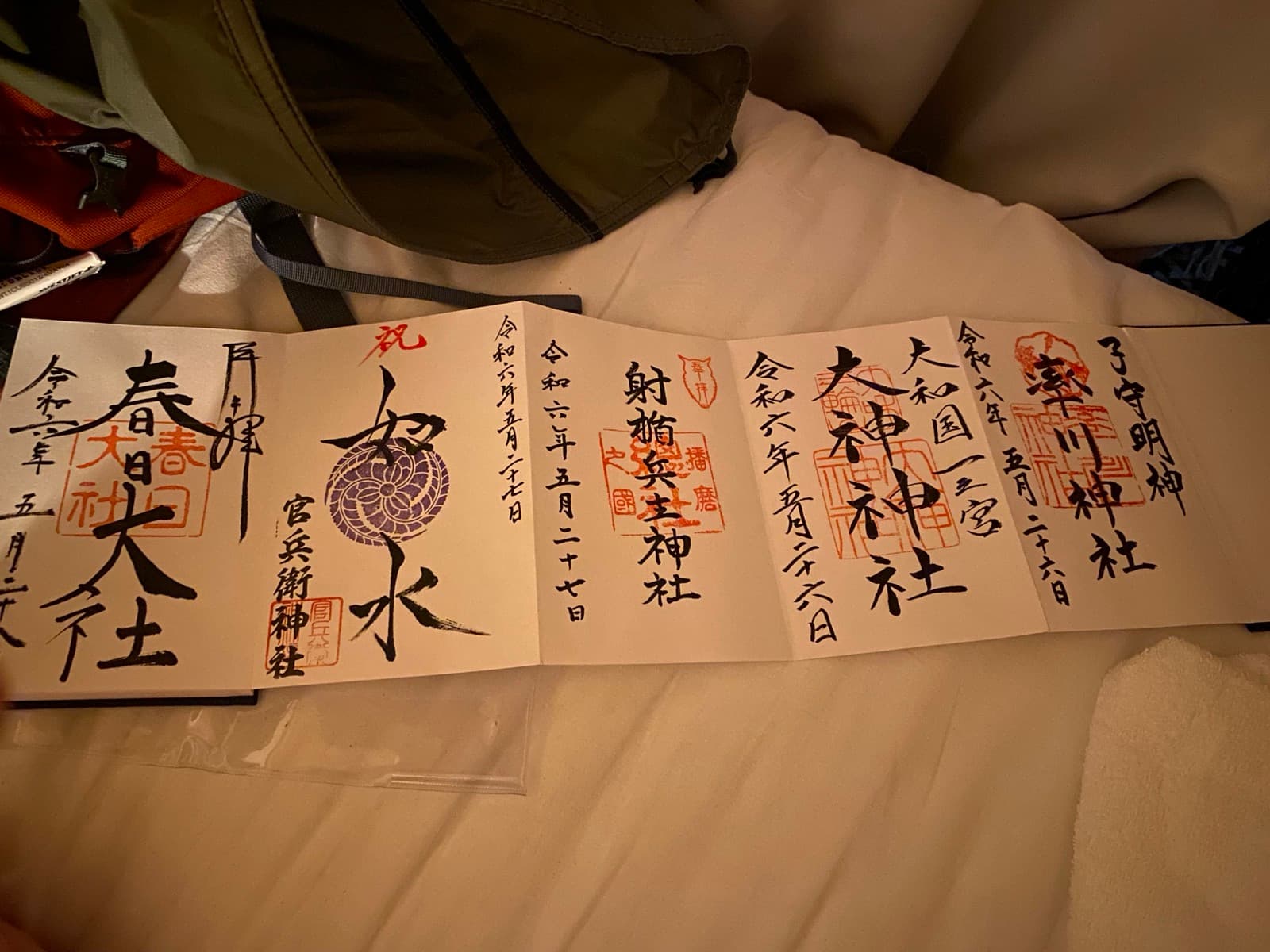
Goshuin in Japan are easy to mistake for tourist collectibles, but they carry a different weight. A goshuin records that someone visited a shrine or temple, and the handwritten calligraphy plus red seal make the memory feel formal, physical, and tied to a specific place.
What a goshuin actually records
A goshuin is a calligraphy-and-seal inscription received at a shrine or temple in Japan, usually written into a dedicated stamp book called a goshuincho. It is not simply a rubber stamp collected at random. The page normally records the place, the date, and the identity of the sacred site through brush writing and red ink.
That is why goshuin feel more serious than generic travel memorabilia. They are tied to a visit and to the etiquette of receiving something made by a real person on site. The object carries place, handwriting, and occasion together.
Why people find goshuin so memorable
Part of the appeal comes from pacing. Collecting goshuin encourages visitors to notice where they are, line up, wait, and receive the page with care. The process is slower than snapping a photo and moving on. That slowness gives the visit a stronger sense of shape.
The result is also visually distinctive. Each page combines brushwork, seals, and layout in a way that makes the memory of the place feel specific. Even people with limited Japanese can sense that every page belongs to a different encounter.
Why goshuin matter for understanding Japan
Goshuin are useful for cultural understanding because they bring together several Japanese habits at once: respect for place, appreciation of handwriting, ritual exchange, and careful record keeping. A small book ends up carrying much more than a list of destinations.
For learners, goshuin are especially effective because they connect visible kanji, dates, shrine names, and movement through real spaces. The keyword becomes more than vocabulary. It becomes a way to read travel, ritual, and memory as one system.