Kendama in Japan: Why a wooden toy became a practice culture
A guide to kendama in Japan, how the cup-and-ball toy works, and why repetition, skill levels, and small improvements make it more than a childhood game.
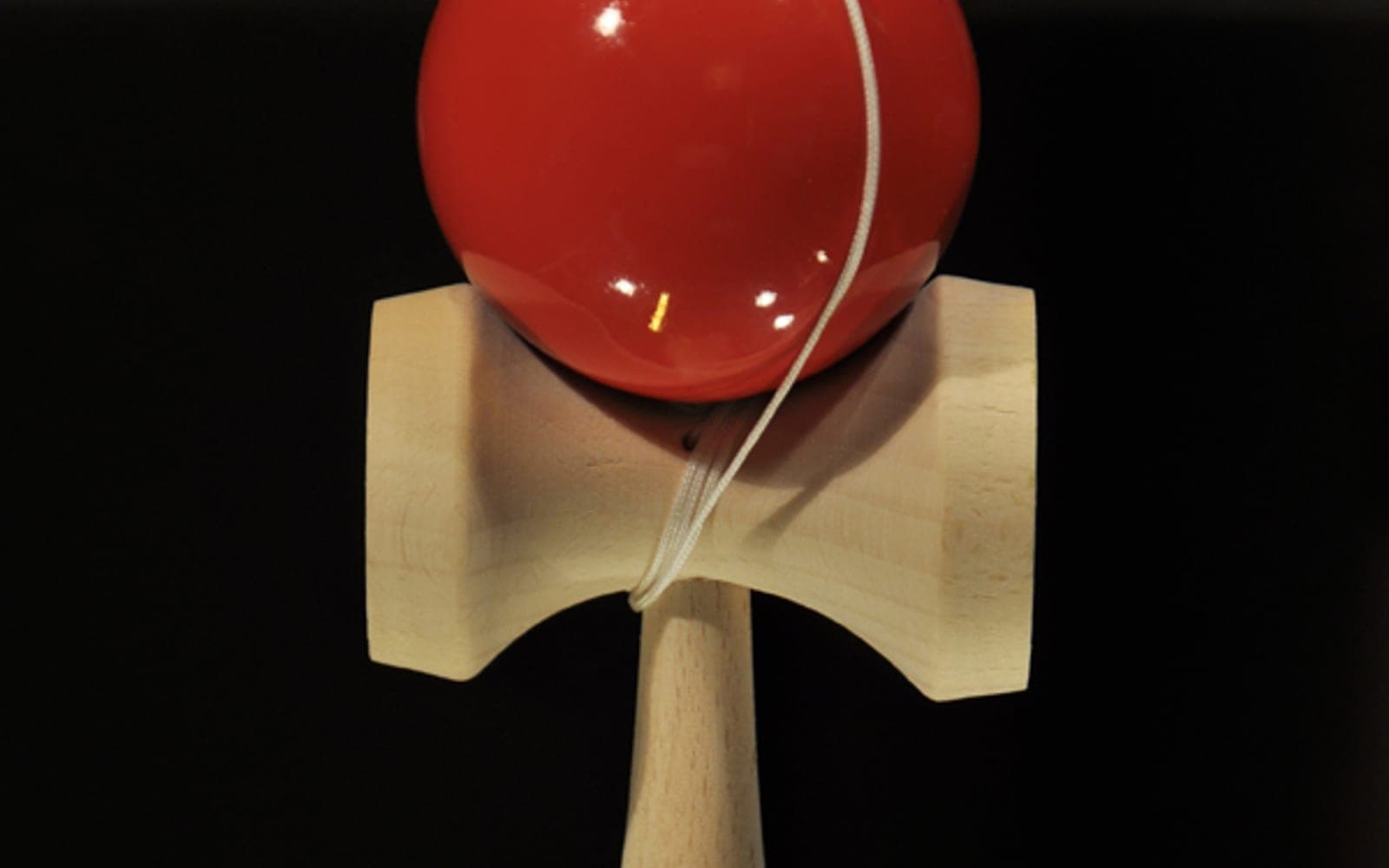
Kendama looks simple: a wooden handle, cups, a spike, and a ball on a string. The simplicity is the point. It turns coordination into a visible practice that rewards one small improvement at a time.
How kendama works
A kendama has a handle with cups, a spike, and a ball attached by string. The player swings, lifts, catches, stalls, or balances the ball in different ways. The basic object is small, but the number of possible tricks grows quickly.
That makes kendama easy to understand and hard to master. A beginner can try a simple catch immediately, while experienced players work through precise sequences that depend on timing, knees, grip, and control.
Why it feels like practice, not just play
Kendama has the rhythm of a practice culture. You repeat a movement, fail visibly, adjust, and try again. The feedback is immediate: the ball lands or it does not. That clarity makes progress satisfying because improvement can be felt in the body.
In Japan, kendama appears as a toy, school activity, hobby, and competitive skill. It fits well with graded challenges because each trick can be named, repeated, and judged. Small steps matter.
Why Japanese learners can use it as a clue
For learners, kendama is useful because it gives a concrete example of how repetition works in culture as well as language. The same idea appears in handwriting practice, kana drills, martial arts forms, and musical training: repeat with attention until control improves.
It also gives vocabulary a physical anchor. Words for hand, ball, string, cup, skill, practice, success, and failure become easier to remember when connected to an object built around trying again.