Ikebana guide: What Japanese flower arrangement teaches about negative space
Ikebana is not decoration. It is a practice built around restraint, season, and the idea that empty space carries as much weight as the flowers themselves.
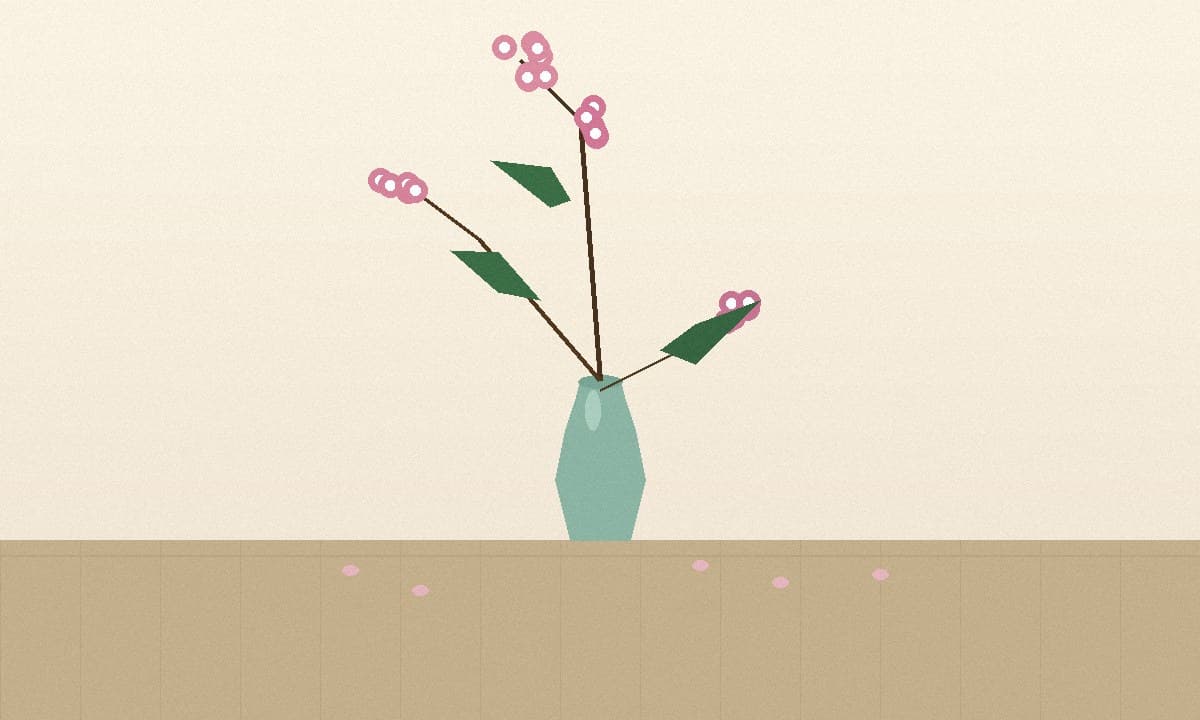
Ikebana is not about filling a vase. It is about choosing what to leave out. The most important element in a Japanese flower arrangement is often the space between the stems.
What makes ikebana different from Western floral design
Western floral design tends toward fullness: the more flowers, the richer the arrangement feels. Ikebana works in the opposite direction. A single branch, three stems, or even one flower placed at a precise angle can constitute a complete arrangement. The logic is sculptural rather than decorative. What is not there is as considered as what is.
The three main structural elements are shin (heaven), soe (humanity), and hikae (earth). Their proportions and angles create a deliberate asymmetry that reads as natural rather than accidental. In classical schools, the relationship between these three elements is strict. In contemporary styles, the relationships are freer but the underlying principle—that each element has a role and a direction—remains.
The schools and how they differ
Ikenobō is the oldest school, with roots in fifteenth-century Kyoto. Its arrangements are formal and structured, developed from Buddhist altar offerings. Ōhara school, founded in the late nineteenth century, introduced landscape-style arrangements and shallow containers that allowed horizontal compositions and a more naturalistic feel. Sōgetsu, founded in 1927, is the most open to interpretation, treating any material—metal wire, driftwood, plastic—as valid if it serves the composition.
These differences matter because they reveal how a tradition can evolve across centuries while keeping a recognizable core. All three schools still operate today with formal instruction, graded certification, and thousands of active students worldwide. Ikebana is taught in Japanese schools and practiced in homes, hotels, temples, and corporate lobbies.
Why ikebana connects to broader Japanese aesthetics
Ikebana is related to concepts like ma (間), the Japanese idea of a meaningful pause or gap, and mono no aware, the gentle sensitivity to the impermanence of things. A spring arrangement uses branches that are just beginning to bud. An autumn arrangement might use dried seed pods, moss, or a single persimmon. Each choice signals a precise moment in the seasonal calendar.
That seasonal precision is not incidental. Ikebana teaches that beauty is inseparable from timing. Noticing this connection helps learners understand why Japanese design, architecture, food, and even packaging are all so attentive to seasonal detail. The same logic that governs an ikebana arrangement—what is appropriate for this moment, what should be set aside—appears throughout Japanese cultural life.