Japanese wrapping culture: the design details behind gifts and packaging
Japanese wrapping is not only decorative. Folds, paper texture, bags, knots, and seasonal color choices often communicate care before the object itself is opened.
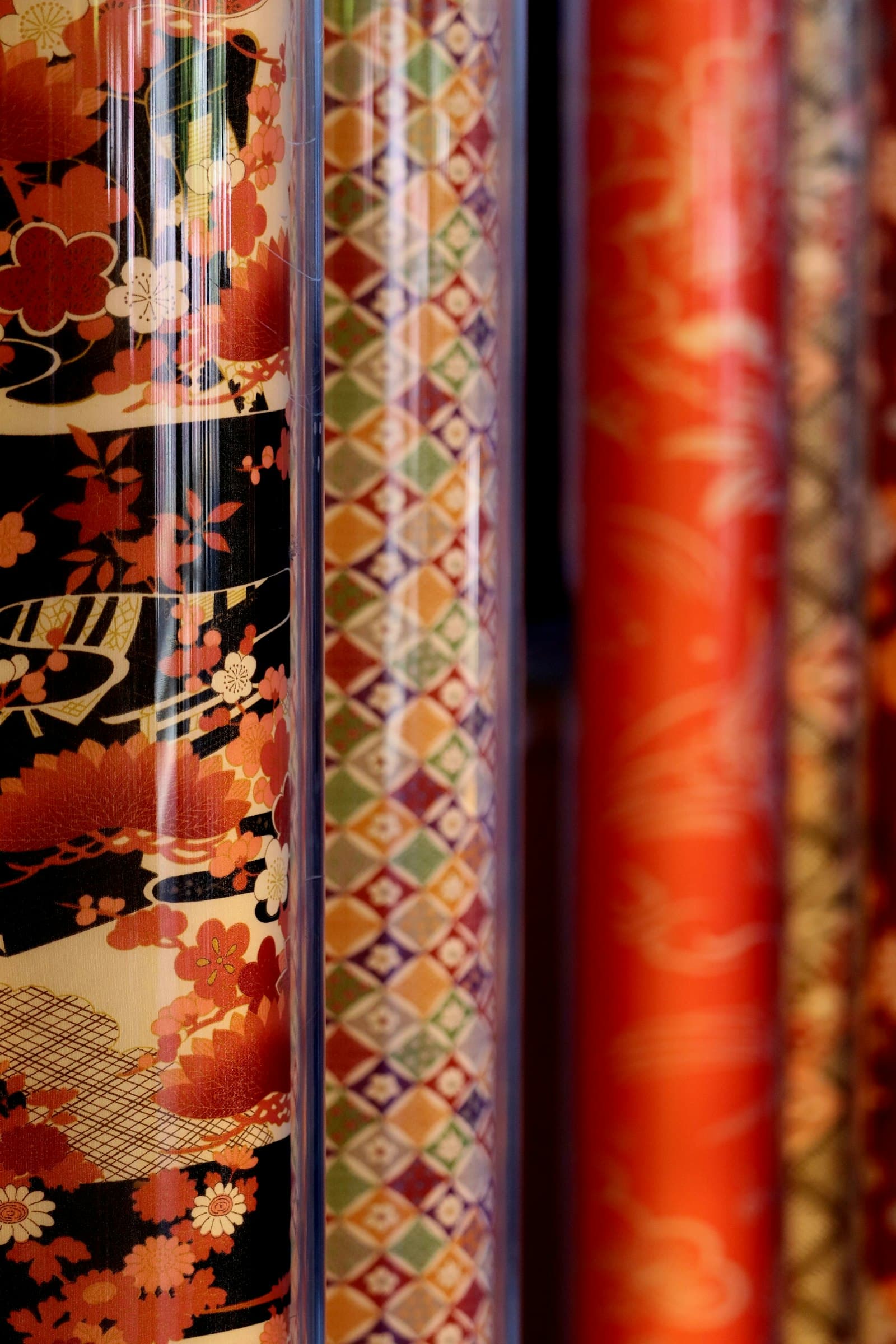
A wrapped object in Japan often says something before the gift does. The paper, fold, bag, knot, and level of neatness can signal the relationship, the occasion, and the amount of care someone wanted to make visible.
Why presentation becomes part of the gift
In many Japanese settings, wrapping is a form of preparation that the receiver can read. A department-store box, a folded paper sleeve, or a carefully tied furoshiki cloth says that the object has been handled with attention. The outer layer is not simply hiding the item. It makes the exchange feel deliberate, which matters in gift-giving, business visits, seasonal greetings, and even small thank-you gestures.
This is why the wrapping can sometimes feel more formal than the object inside. A modest snack from a trip may be placed in an individual wrapper, then a box, then a branded paper bag. The layers are not always about luxury. They create a clean sequence: choose, protect, present, receive. That sequence makes the social meaning easier to understand.
The design details people notice without naming them
Good wrapping depends on small decisions. Paper weight affects whether a fold looks crisp or tired. A knot on a furoshiki can be practical, decorative, or intentionally easy for the receiver to untie. Seasonal colors, such as pale pinks in spring or deeper reds around New Year, can make a gift feel timed to the moment. Even the position of a shop sticker can keep the design looking composed.
These details are easy to miss because they rarely announce themselves. A bag may include a cardboard base so the gift stays upright. Tissue may be folded to reveal the logo cleanly. Handles may be tied closed in a way that prevents the contents from shifting. The design succeeds when the receiver feels ease, not when the wrapping asks for attention.
How furoshiki connects elegance and practicality
Furoshiki cloths show the practical intelligence behind Japanese wrapping culture. One square cloth can carry bottles, books, lunch boxes, clothing, or oddly shaped objects depending on how it is folded and knotted. Unlike paper packaging, it can be reused, washed, stored flat, and adapted to different sizes. The beauty comes from the fact that the system is flexible rather than elaborate.
The cloth also changes the mood of the exchange. A gift wrapped in furoshiki feels held rather than packaged. The receiver may return the cloth, keep it if intended, or reuse it later. That circulation gives the object a social life beyond one transaction. For learners, words such as tsutsumu, to wrap, become easier to remember when tied to a gesture like this.
What wrapping teaches about Japanese hospitality
Japanese hospitality often works through anticipation. Wrapping anticipates the receiver's experience: carrying the item home, opening it without damage, understanding the occasion, and feeling that the exchange was not rushed. That is why presentation appears in ordinary purchases as well as formal gifts. A bakery, stationery shop, or tea store may treat a simple item as something worth composing.
The lesson is not that every object must be overpackaged. Modern Japan also debates waste, plastic, and more sustainable choices. The deeper point is that care becomes visible through form. When wrapping is thoughtful, it turns a practical handoff into a small ritual, and that is what makes the design memorable.