Neon signage in Japan: why city streets feel bright, dense, and still readable
How Japanese neon signs turn busy streets into readable layers of food, nightlife, stations, shops, and neighborhood identity.
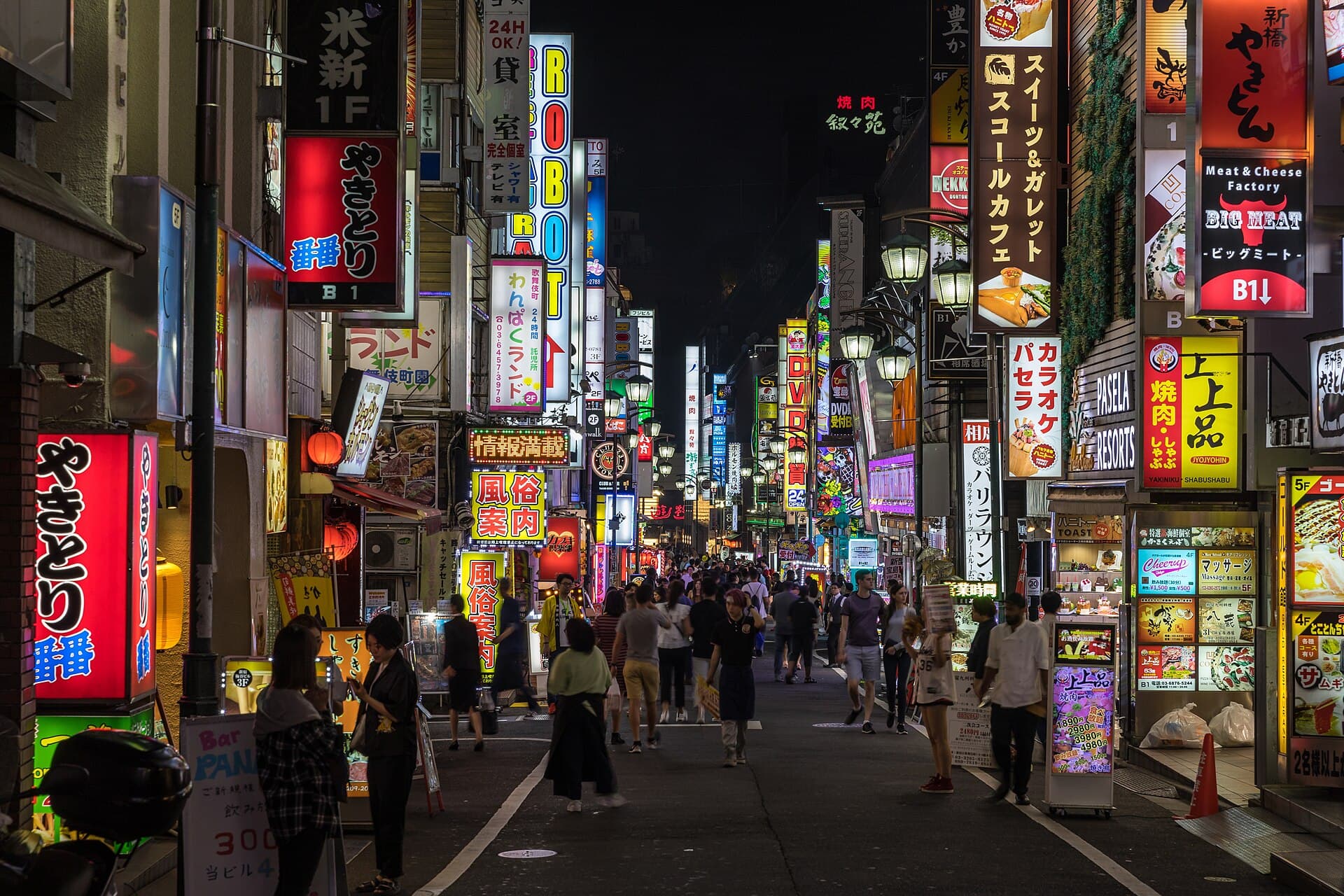
Neon signage in Japan can look overwhelming at first: stacked signs, glowing arrows, vertical text, logos, menus, floor numbers, and colors competing for attention. But the longer you look, the more the street starts to sort itself into useful layers.
Why dense signs still feel organized
Many Japanese city streets are narrow, vertical, and full of businesses stacked above one another. A restaurant may sit on the third floor, a karaoke room on the fifth, and a small bar below street level. Signage has to solve that vertical puzzle, so it often points upward, downward, and sideways at the same time.
That is why the density is not random. Floor numbers, arrows, repeated colors, and familiar category words help people scan quickly. A visitor may see chaos, but a regular city user reads clues: ramen, izakaya, karaoke, pharmacy, station exit, ticket office, or late-night food.
What neon tells you about the neighborhood
Neon signs also carry mood. In districts such as Shinjuku, the glow signals nightlife, entertainment, and the feeling that the city keeps moving after office hours. In smaller shopping streets, illuminated signs can feel more practical: a way to keep a restaurant, clinic, or shop visible in the evening.
The best way to understand the design is to notice what each sign is asking you to do. Some signs announce a brand. Others tell you where to enter. Others make a food category instantly recognizable. The street becomes a layered interface for walking.
Why signs help Japanese learners
For beginners, neon signage is a useful bridge between textbook Japanese and real city language. Katakana appears in shop names and borrowed words. Kanji appears in place names, services, and food categories. Numbers and symbols show prices, floors, hours, and exits.
You do not need to read everything to learn from it. Start by spotting one repeated word, one floor number, or one category sign. Over time, the glow becomes less like noise and more like a map of how urban Japan communicates.