Tatami rooms in Japan: why seasonality changes the whole experience
A tatami room does not feel the same in every season. Humidity, scent, light, cushions, futon storage, and garden views all change how the room is used and remembered.
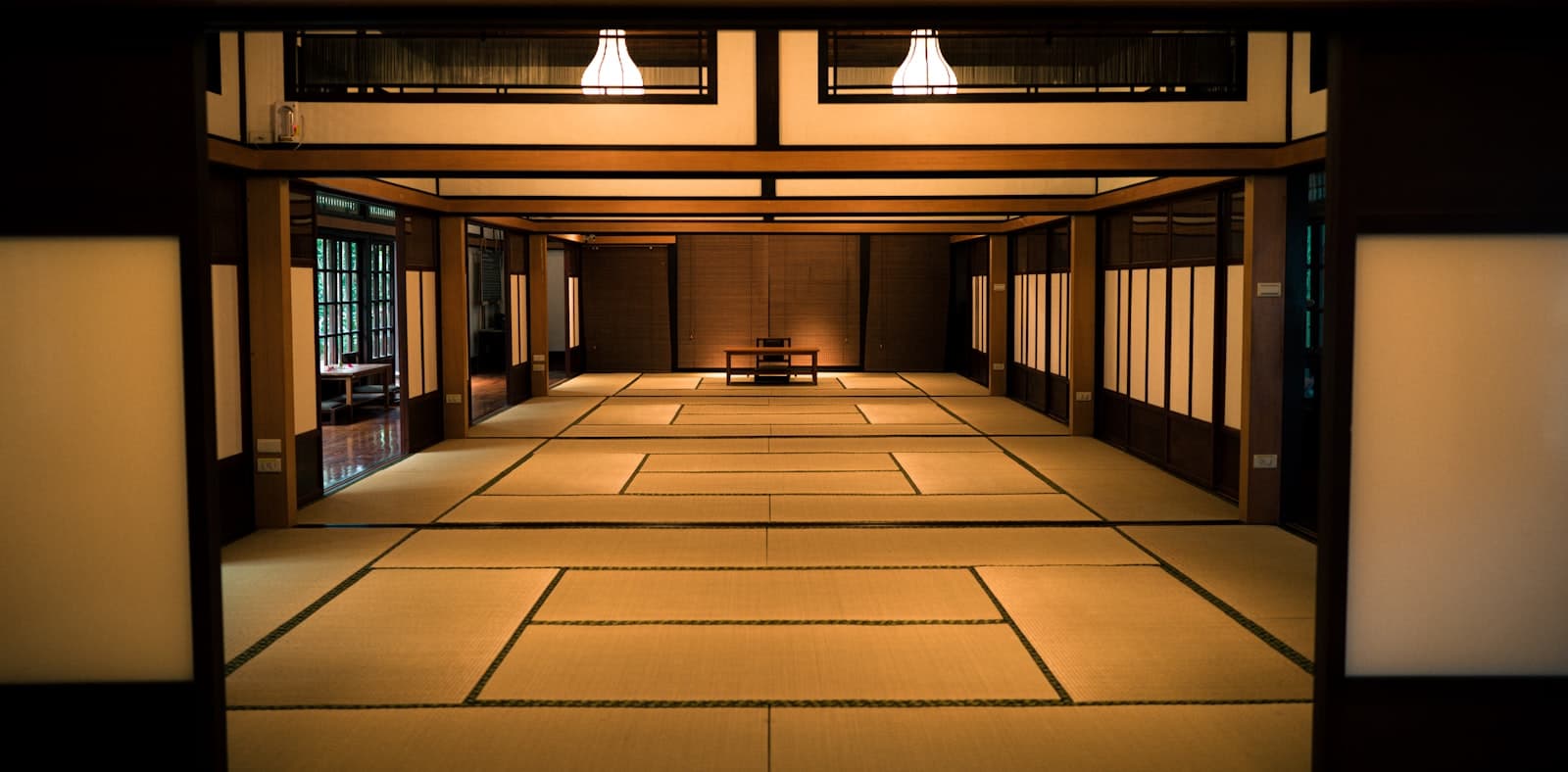
Tatami is often described as a traditional floor material, but that misses how alive it feels across the year. A tatami room in humid June, bright October, and cold January is technically the same room, yet the body experiences it differently.
Why tatami is a material you notice with the body
Tatami mats are traditionally made with a rice-straw core and an outer weave of igusa rush. Even when modern materials are used inside, the surface changes how a room feels under bare feet or socks. It is softer than wood, firmer than carpet, and slightly springy when walked on. That texture makes the floor an active part of the room rather than a surface people ignore.
The seasonal element begins with scent. New or well-kept tatami has a grassy smell that becomes stronger in humid weather and subtler in dry air. For many people in Japan, that scent is tied to memories of inns, grandparents' homes, martial arts rooms, or summer visits. The room is not only seen; it is smelled and felt.
Summer: airflow, humidity, and the work of keeping mats healthy
Summer makes tatami care more visible. Humidity can encourage mold, so ventilation matters: opening sliding doors, running fans, using dehumidifiers, and avoiding heavy furniture that traps moisture against the mat. The room may feel calm in photographs, but in practice it requires attention. A tatami room is beautiful partly because someone keeps air moving through it.
The same season also changes how people sit and rest. Thin zabuton cushions, low tables, reed screens, and open shoji or fusuma doors help the room breathe. The floor invites slower movement, but summer heat means the space must stay light. Even language follows this physical reality: words for humidity, airing out, wiping, and drying become part of the room's daily vocabulary.
Winter: warmth, futon routines, and enclosed quiet
In winter, tatami takes on a different role. The room feels warmer than a bare wooden floor and works well with futon bedding that can be spread out at night and stored away in the morning. This daily movement is one reason the room remains flexible. A living area, sleeping area, and guest room can occupy the same space at different hours.
Winter also brings thicker cushions, low heaters, and in some homes a kotatsu placed over the mats. The room becomes more enclosed and intimate. The shoji filters pale light, the floor softens sound, and the habit of sitting low makes conversation feel contained. Seasonality here is not decoration; it changes posture, temperature, and the social mood of the space.
What seasonal tatami teaches language learners
Tatami vocabulary becomes easier when connected to actual use. Tatami, zabuton, futon, shoji, fusuma, tokonoma, and washitsu are not just interior-design terms. They describe a system in which floors, screens, bedding, cushions, and alcoves work together. Each word points to a behavior: sitting, sleeping, sliding, storing, airing, receiving guests.
That system is why tatami rooms remain such a useful cultural topic. They show how Japanese design often depends on change over time rather than a single fixed look. For learners, the room becomes a memory map. One season gives you humidity and ventilation; another gives you bedding and warmth. The vocabulary stays attached to lived scenes.