Shinto purification: the Japanese words hidden in shrine rituals
Shinto purification is easier to understand when you listen to its vocabulary. Words such as harae, misogi, temizu, and kegare reveal how cleansing connects body, place, and attention.
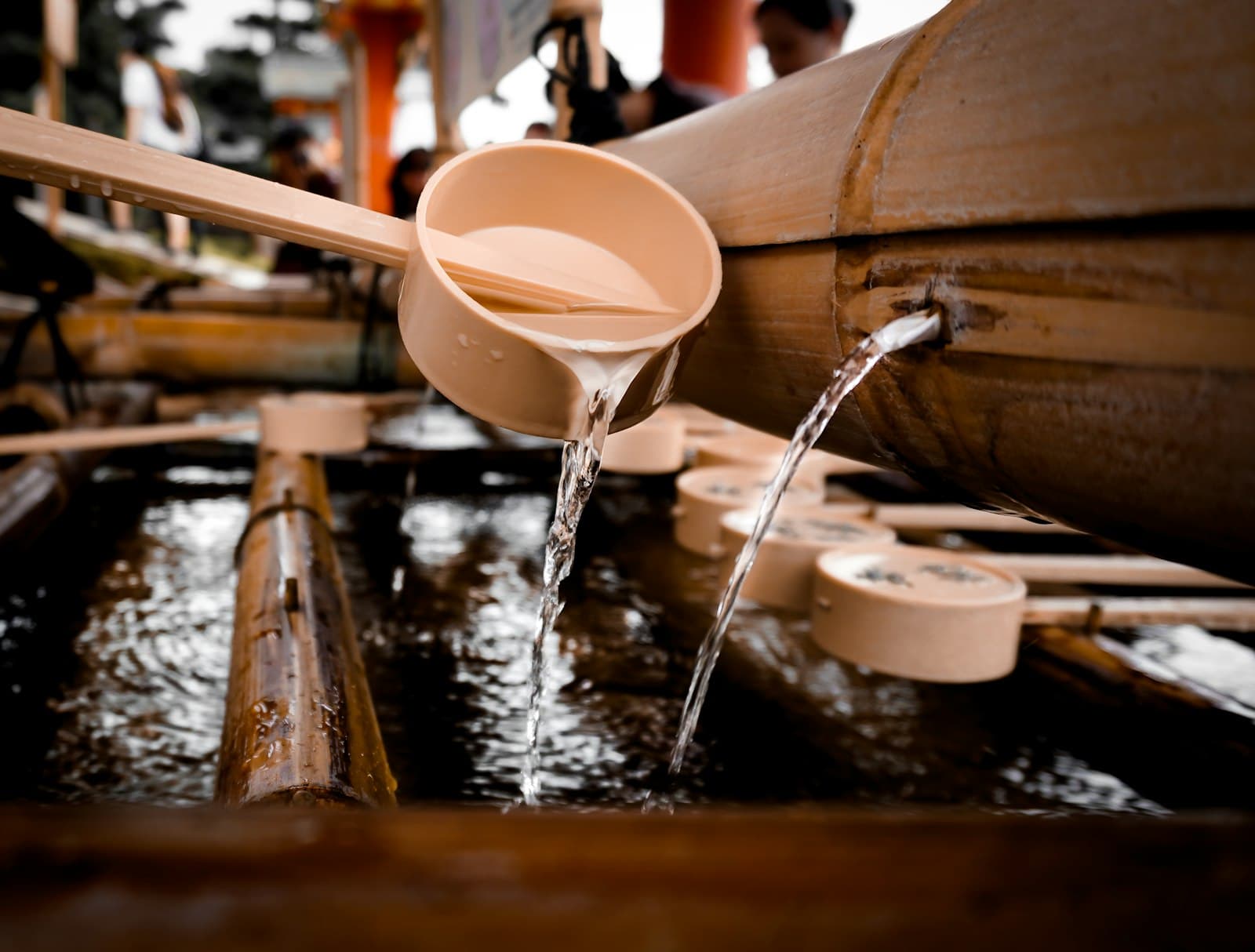
A shrine purification basin can look like a simple place to rinse hands, but the words around it tell a deeper story. Shinto purification is not only a visible ritual; it is also a vocabulary of clearing, crossing, and becoming ready to enter sacred space.
Why purification starts with the idea of kegare
The word kegare is often translated as impurity, but that English word can sound more moral than the Shinto idea usually is. Kegare refers to a condition of pollution, disruption, or heaviness that can come from death, illness, blood, misfortune, or contact with disorder. It is less about guilt and more about a state that needs clearing before a person approaches the kami, the spirits or presences honored at shrines.
This distinction matters because it changes how the ritual feels. Purification is not a confession. It is a reset. The language points toward returning to a better state of attention, one that lets a person cross from ordinary space into a place marked as sacred. That is why even a short rinse at a shrine entrance carries more meaning than hygiene alone.
Harae and misogi: two words for clearing the body and spirit
Harae, sometimes written harai in compound words, means purification or exorcising impurity. It can refer to formal rites performed by priests, including the waving of an onusa wand with paper streamers. The movement is visual, but the word helps explain the purpose: clearing what clings, restoring a cleaner relationship between person, place, and kami.
Misogi is another key word, linked especially to purification through water. It evokes older practices of standing under waterfalls, entering rivers, or using cold water to cleanse body and spirit. Most shrine visitors will not perform full misogi, but the idea survives in smaller gestures. When water is used before prayer, the action carries a trace of that older vocabulary.
Temizu and chozu: the ritual at the basin
The water pavilion near a shrine entrance is usually called a temizuya or chozuya. Both names refer to the hand-water ritual performed before approaching the main hall. The sequence is simple: rinse the left hand, rinse the right hand, pour water into the left palm to rinse the mouth, clean the handle of the ladle, and return it neatly. The order turns water into a short choreography.
For learners, this is useful because the vocabulary attaches to physical memory. Te means hand, mizu means water, and the action makes the compound easy to remember. The basin is not decorative background. It is a place where language, body, and etiquette meet in a way that can be watched, practiced, and understood without needing abstract explanation first.
What the words reveal about shrine visits
The vocabulary of purification reveals that shrine visits are structured around transitions. A person moves from street to gate, from gate to basin, from basin to prayer, and from prayer back into ordinary movement. Each step narrows attention. The words do not simply label objects; they organize the visitor's behavior and make the visit legible.
That is why these terms are valuable for Japanese learners. They turn a familiar tourist scene into a sequence of meanings. Instead of memorizing harae or temizu as isolated words, it becomes possible to connect them to water, posture, silence, and the feeling of preparing to speak respectfully in a sacred place.