Shinto purification ritual guide: temizu rules visitors often miss
The shrine water pavilion is not a photo stop first. It is a small sequence of gestures that prepares attention, posture, and pace before entry.
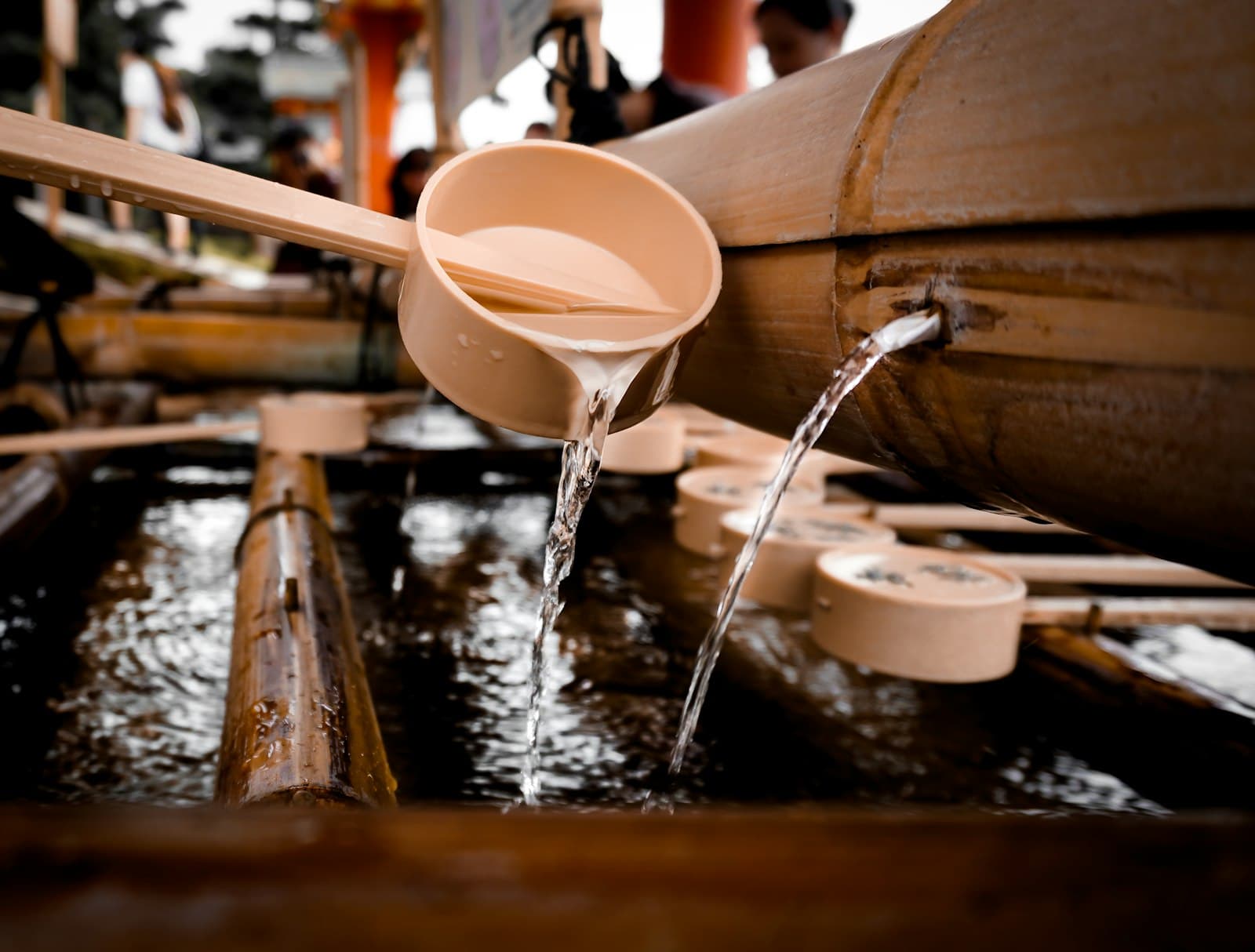
Visitors often notice the ladles at a shrine before they understand their purpose. Temizu looks simple, but the hidden rules matter because the action is less about washing dirt off and more about entering a different space with the right tempo.
Why the temizuya matters before the shrine itself
At many shrines, the purification basin appears before the main building, which already tells you something important. The visit does not begin at the prayer hall. It begins with a transition. Washing hands and rinsing the mouth in a set order changes the body first, then the mind, and only after that does the visitor continue inward.
This is why temizu is easy to underestimate. The gestures are brief and often quiet, so first-time visitors may treat them as optional decoration. In practice, the sequence frames the whole visit. It establishes that shrine space has a different rhythm from the street outside.
The hidden rules that are rarely explained out loud
Most of the rules are not dramatic. Do not block the basin while taking photos. Do not let the ladle touch your mouth directly. Do not splash loudly, rush through the sequence, or treat the water as a prop for performance. The point is measured movement and minimal disruption, not showing that you know the ritual.
Those quiet rules reveal a broader social logic. Respect in Japan is often conveyed through controlled behavior rather than verbal explanation. A person who moves calmly, waits their turn, and handles the ladle carefully is already communicating awareness of the place and of the people nearby.
What learners can take away
For learners, shrine purification is useful because it ties spiritual vocabulary to visible action. Words for wash, rinse, bow, ladle, basin, and entrance become easier to retain when linked to a precise sequence. You can picture the movement instead of trying to memorize isolated nouns.
It also helps explain an important cultural pattern: Japanese etiquette often relies on noticing what others are doing and matching the tone. DarumaGo benefits from topics like this because they connect language to physical scenes, which makes both the words and the behavior easier to understand.