Omikuji meaning: How Japanese fortune slips are read and tied
A simple explanation of omikuji meaning in Japan, including lucky and unlucky fortunes, shrine customs, and why people tie some slips at the shrine.
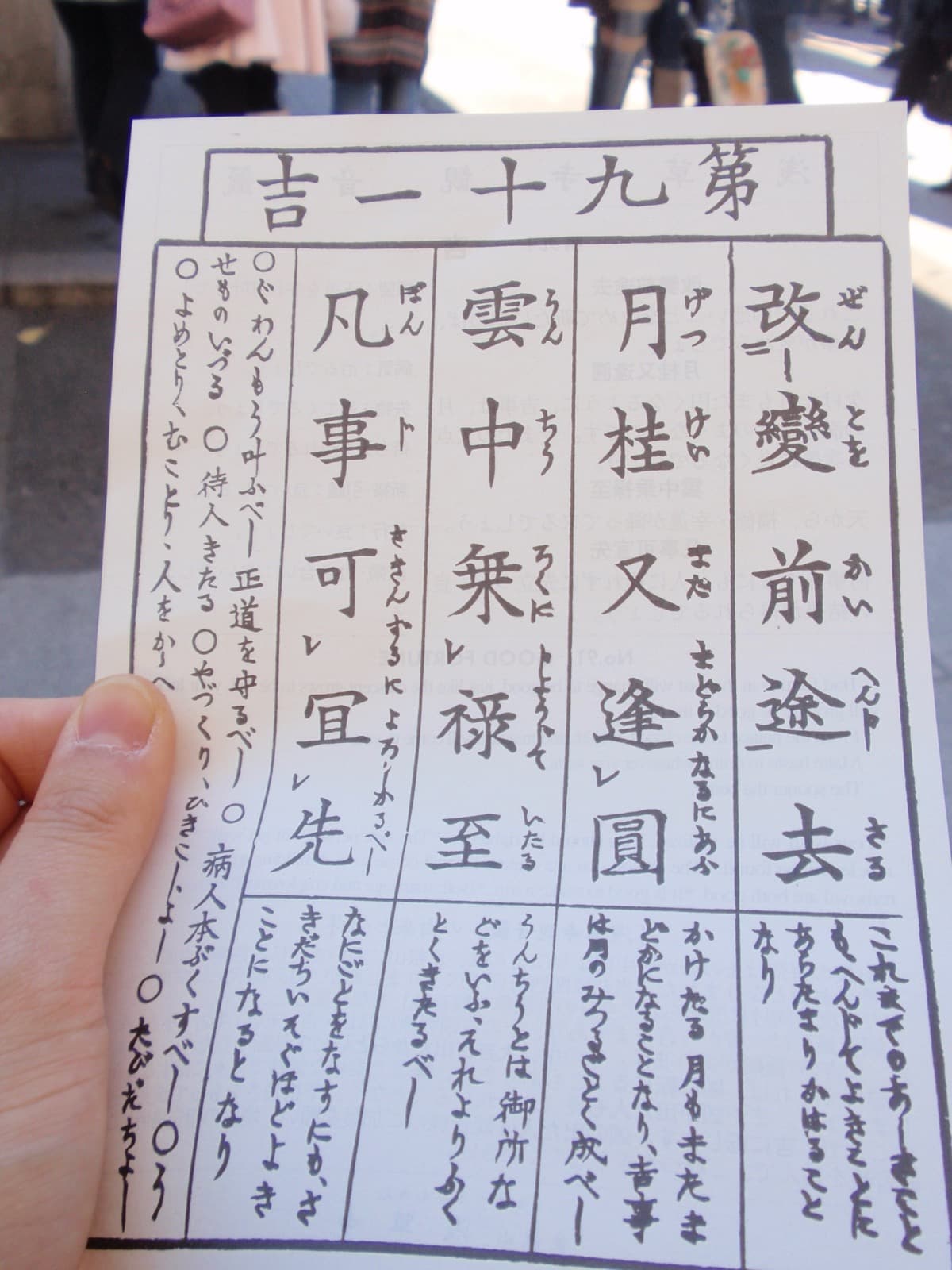
Omikuji are memorable because they turn chance into a small ritual of interpretation. The paper slip matters, but the deeper appeal comes from how people read the result, react to it, and place the moment inside a visit to the shrine or temple.
What omikuji are meant to do
When people search for omikuji meaning, they often want a direct answer about whether the slip predicts the future. In practice, omikuji work more like structured prompts for reflection. They frame luck, timing, relationships, travel, or study inside a ritual moment that feels more deliberate than ordinary advice.
That is part of why the custom remains easy to remember. The fortune is short, portable, and emotionally legible. Even a visitor with limited Japanese can feel that the object condenses uncertainty into something readable and concrete.
Why some fortunes are tied at the shrine
One of the best-known images is a cluster of paper fortunes tied to wires or branches at the shrine. People often do this when the result feels unlucky or when they want to leave the negative outcome behind in a sacred place rather than carry it away.
The action has symbolic force because it turns interpretation into movement. Instead of only reading the paper, the visitor does something with it. That makes the ritual feel active, which is one reason omikuji stay so vivid in memory.
Why omikuji help explain everyday spirituality
Omikuji are useful for understanding Japan because they show how spiritual habits can stay light, practical, and woven into ordinary visits. A person does not need a long ceremony to experience the mix of hope, caution, and reflection the fortune creates.
For language learners, the topic also creates strong anchors for words about luck, wishes, travel, exams, and relationships. It is easier to remember that vocabulary when it belongs to a scene full of paper, knots, movement, and expectation.