Ema in Japan: Meaning, shrine customs, and why people write wishes on wooden plaques
What ema boards are for, what people usually write on them, and why they remain such a visible part of shrine visits.
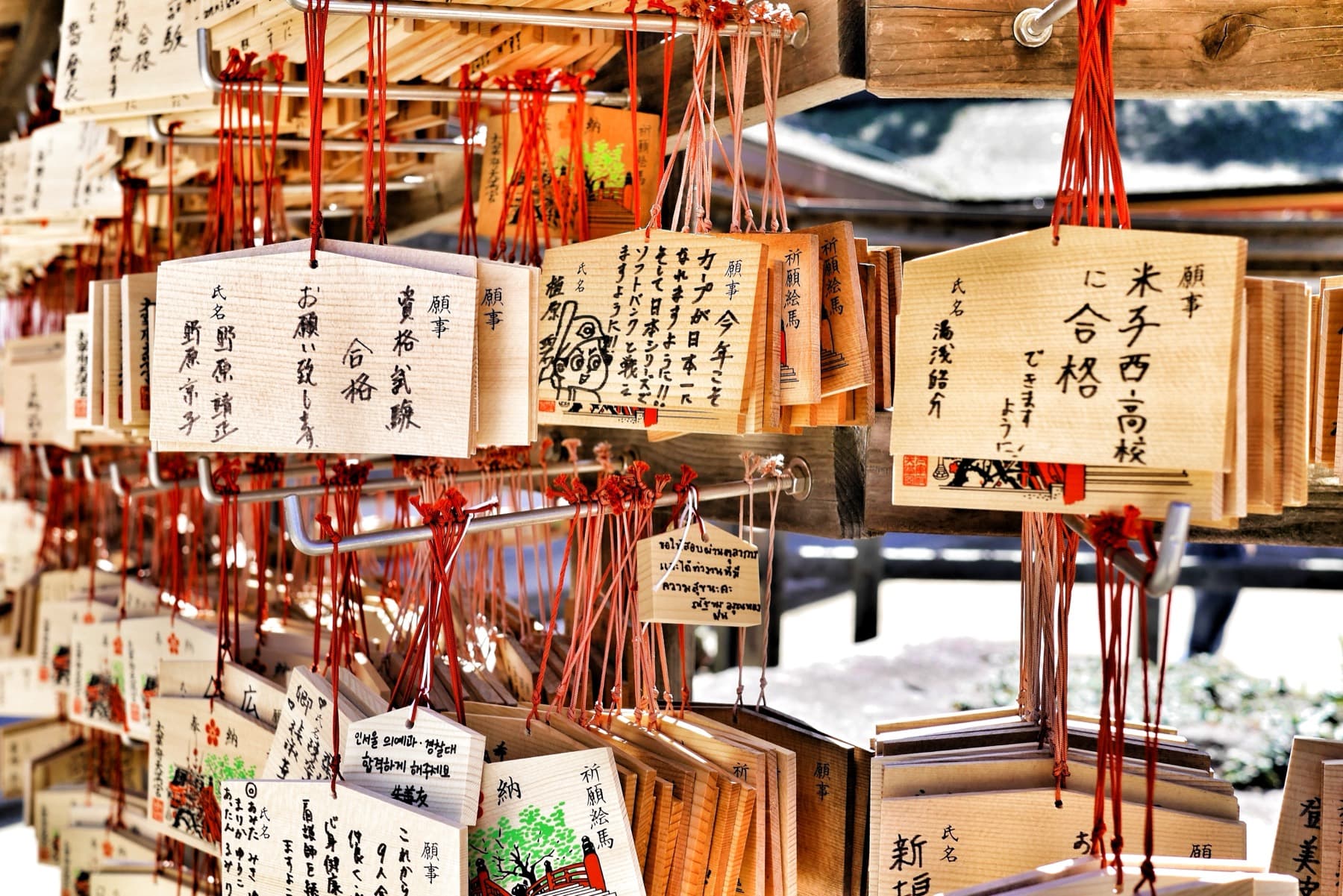
The meaning of ema in Japan becomes clearer once you stop seeing them as souvenirs. They are small written wishes left in a sacred setting, somewhere between private hope and visible public ritual.
What ema are actually for
Ema are small wooden plaques sold at many shrines where visitors can write a wish, prayer, or message of gratitude. Common topics include exams, health, love, family safety, work, and personal goals. After writing, people hang the plaque in a designated area so it becomes part of the shrine space.
That public visibility is part of what makes ema memorable. The message may be personal, but the act is not hidden. A private hope is placed into a shared setting with many other hopes around it.
Why they remain so emotionally legible
A good explanation of ema in Japan should include tone. The plaques are usually brief. They do not need to be literary or formal to matter. Their power comes from the combination of handwriting, intention, and place. You can walk past hundreds of them and immediately understand that people are leaving behind something they care about.
That is why ema stay easy to remember even for visitors with limited Japanese. The format is simple, the emotion is visible, and the context explains the gesture. Ritual becomes readable through repetition.
Why ema matter for cultural understanding
For language learners, ema are useful because they connect very short written expressions with a real setting. You start to notice names, dates, hopes, requests, and the polite compressed style that appears in many shrine contexts.
They also show a broader Japanese pattern: sincerity does not always need a dramatic display. A small object, a short sentence, and the right place can carry emotional weight very efficiently.