Daruma dolls meaning: Why one eye is painted before the other
A clear explanation of what daruma dolls symbolize in Japan and why the ritual around goals, persistence, and completion still feels powerful.
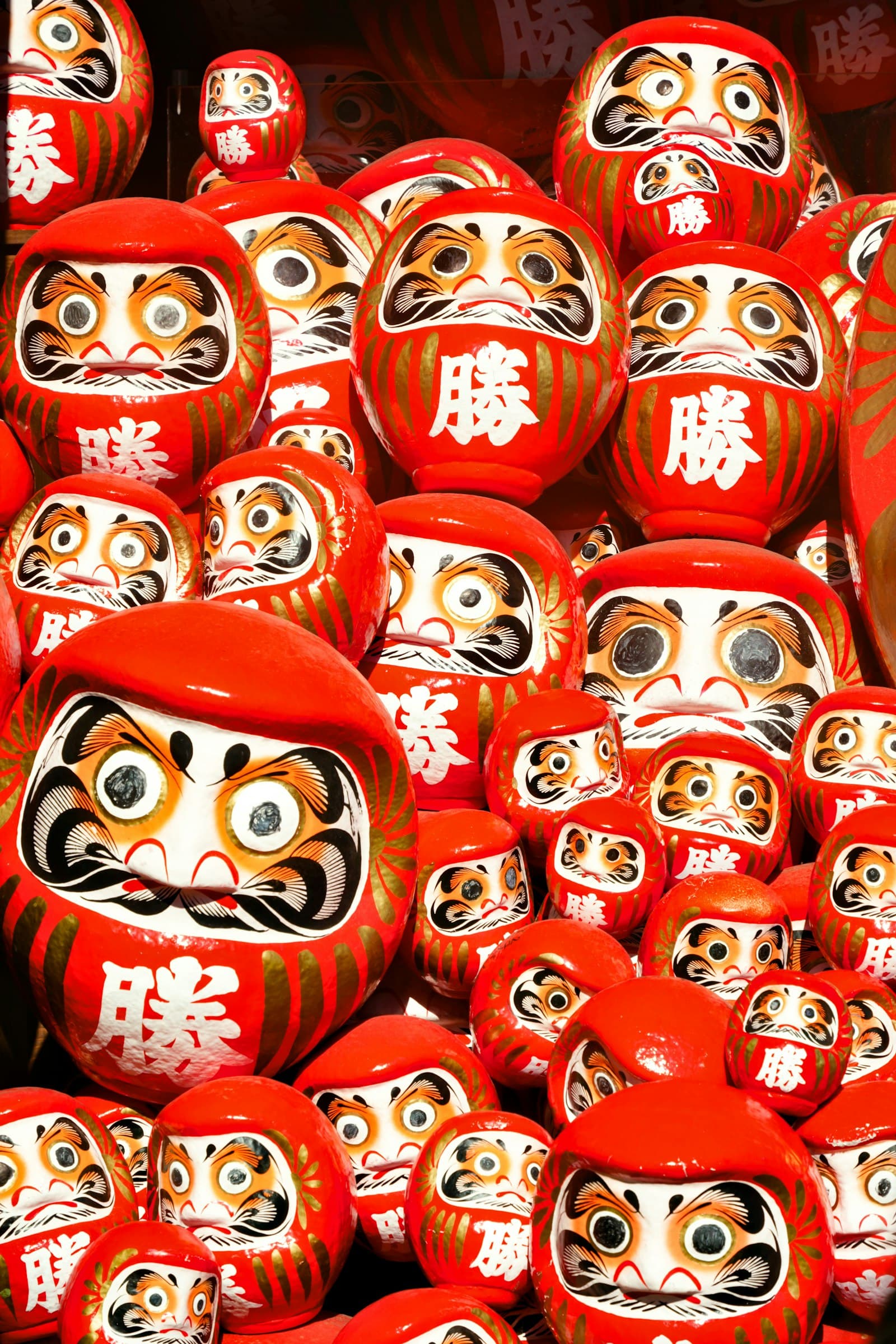
Daruma dolls are easy to recognize, but their appeal is not only visual. The object turns persistence into a small ritual, which is why the custom still feels emotionally legible even in very modern settings.
What daruma dolls are really meant to represent
When people search for daruma dolls meaning, they usually start with the face and the bright red shape. Those details matter, but the lasting appeal comes from what the object asks a person to do with it: commit to a goal, keep it visible, and return to it until the task is finished.
That makes the doll feel more active than decorative. Instead of just symbolizing luck in a vague way, it creates a framework for persistence. The ritual gives a person a concrete reminder that effort should continue even when progress is uneven.
Why one eye comes first
The best-known custom is to paint one eye when setting an intention and the second eye after the goal is achieved. The sequence matters because it leaves the object visibly incomplete. That unfinished state keeps the promise present in a way that a spoken wish often does not.
There is something psychologically sharp about that design. The doll becomes a small piece of accountability on a shelf or desk. It is not loud, but it quietly asks whether the person has followed through.
Why the tradition still works today
Modern life often reduces goals to apps, lists, and hidden reminders. Daruma rituals feel different because they are tactile and public enough to be noticed. That is part of why the custom still resonates in homes, shops, classrooms, and campaign settings where perseverance needs a visible form.
For learners of Japanese culture, daruma are useful because they connect vocabulary, symbolism, and personal habit in one memorable scene. A tradition becomes easier to understand when it is tied to an action rather than to a static museum-style explanation.