Jizo statues in Japan: Why these small stone figures appear in streets, temples, and paths
A simple guide to Jizo statues in Japan, including who they represent, why many wear red bibs, and why they remain so visible in daily life.
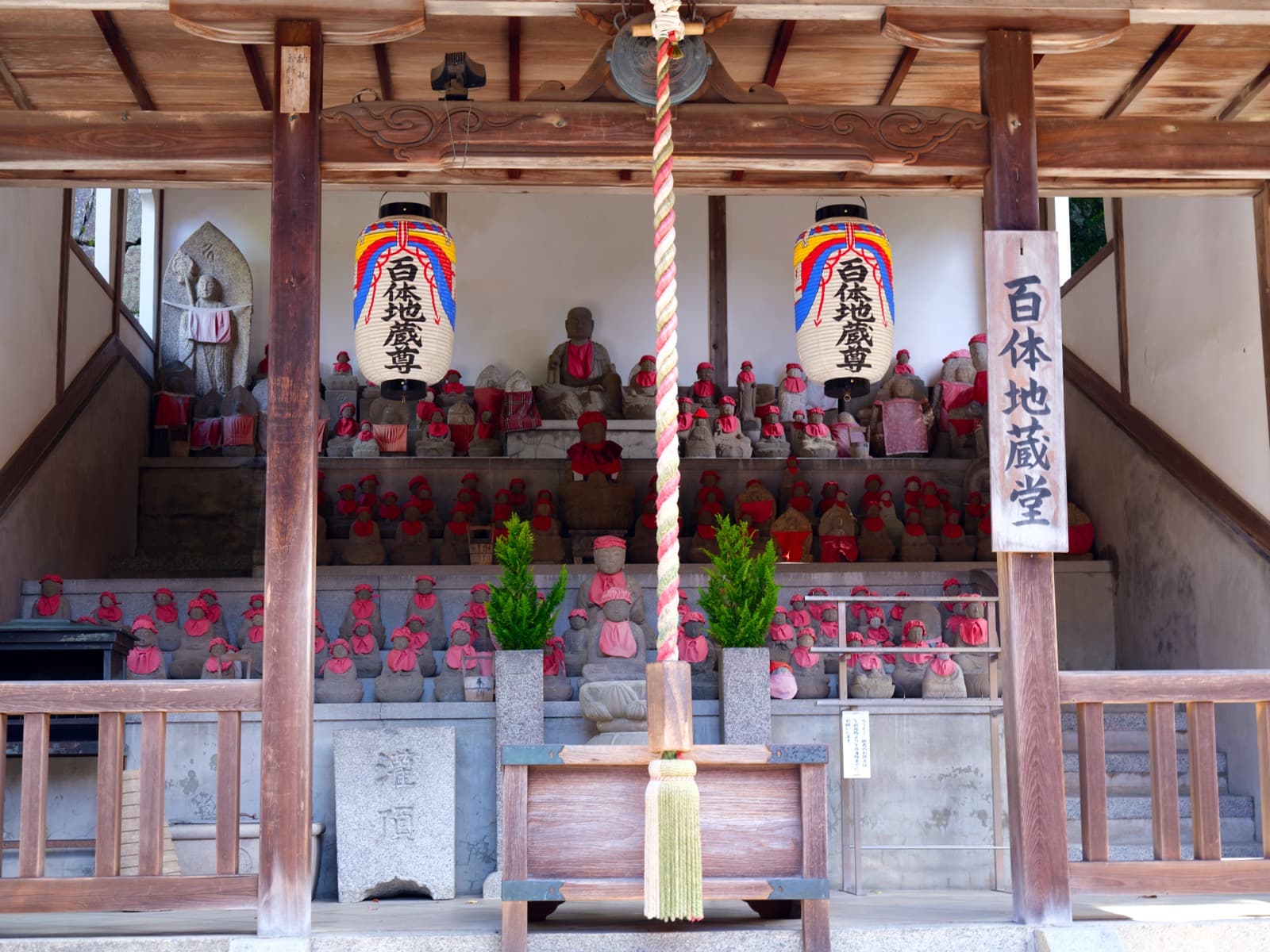
Jizo statues are easy to spot once you know what to look for. They stand quietly at temple edges, roadside corners, mountain paths, and neighborhood lanes, often wearing red bibs or caps. Their scale is small, but their presence reveals a lot about how care, protection, and memory are woven into ordinary Japanese space.
Who Jizo represents
Jizo is a Buddhist figure associated with protection, compassion, and guidance. In Japan, Jizo statues are especially connected with children, travelers, and those who need safe passage through uncertain situations. That is one reason they appear in so many transitional places such as roadsides, paths, and temple approaches.
The statues tend to be modest in scale, which is part of their effect. They do not dominate the landscape. Instead, they create small points of reassurance within it. Even people who do not know the doctrinal background often recognize that the figure signals care and guardianship.
Why many Jizo statues wear red bibs
One of the most memorable details is the red bib or cap often placed on Jizo statues. These garments are usually offerings left by local people, families, or temple visitors. They make the statue feel less distant and more relational, as if the figure is being looked after while also looking after others.
Flowers, coins, small toys, and fresh cloth are also common nearby. Together these details show that Jizo is not treated as an abstract symbol alone. The statue becomes part of a local rhythm of remembrance and prayer, where care is expressed through maintenance, replacement, and repeated return.
Why Jizo still matters in everyday Japan
Jizo remains important because the statues live close to ordinary movement. You may pass one on the way to school, see a group beside a residential lane, or notice one near a stairway leading to a temple. Their visibility keeps spiritual care tied to everyday geography instead of separating it from daily life.
For learners, Jizo offers a useful lens on Japan because the statues show how religious meaning often appears quietly rather than dramatically. The figure does not demand attention through spectacle. It stays present through repetition, neighborhood memory, and the sense that certain places deserve gentle protection.