Japanese breakfast guide: What a traditional morning meal usually includes
A practical Japanese breakfast guide covering rice, miso soup, grilled fish, pickles, eggs, and why balance matters more than one fixed menu.
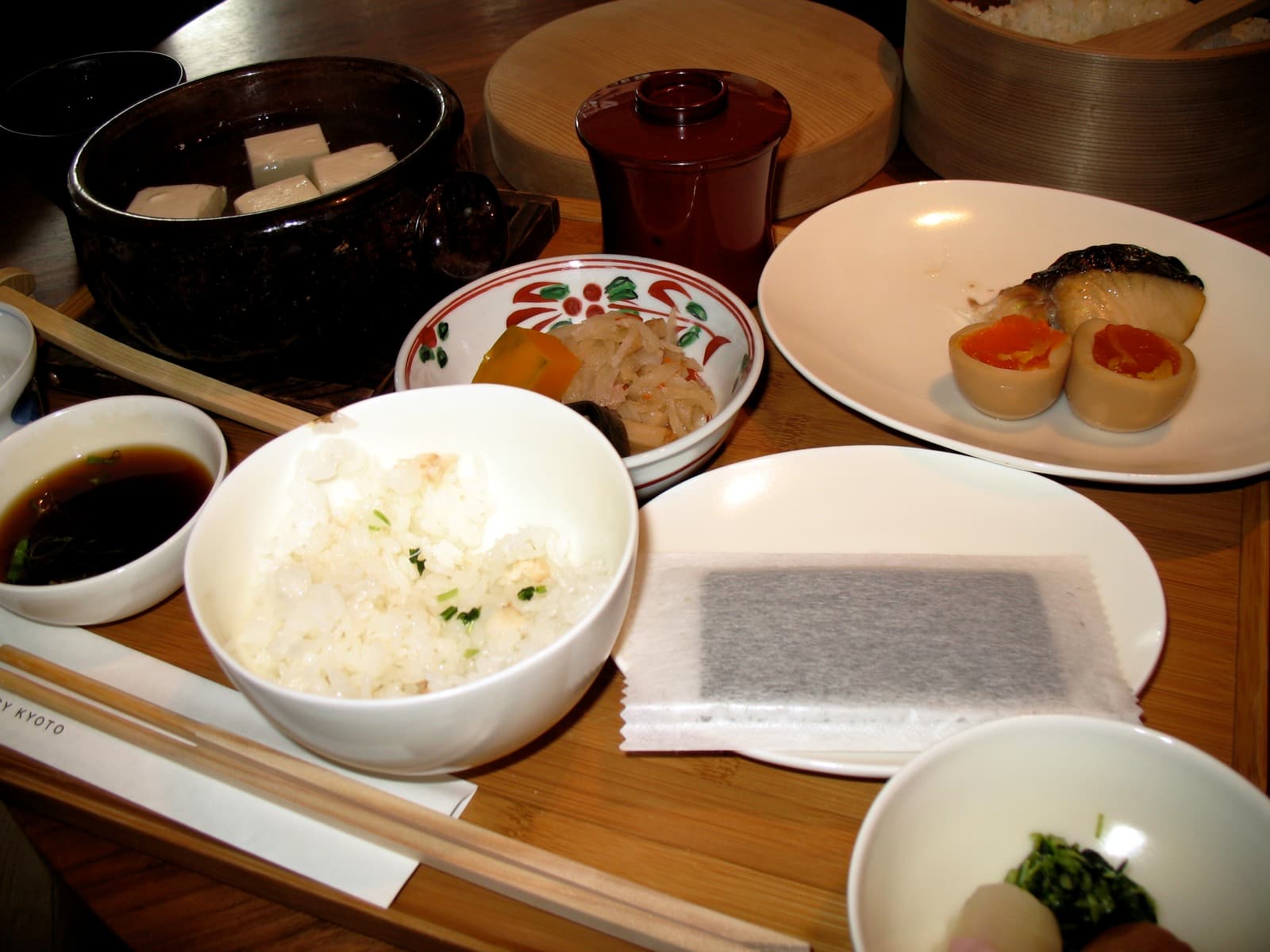
A Japanese breakfast often surprises visitors because it does not revolve around sweetness or speed in the way many Western breakfasts do. Even when the portions are small, the meal can feel complete because it balances warmth, salt, protein, texture, and calm routine right at the start of the day.
What people usually mean by a Japanese breakfast
When people search for a Japanese breakfast guide, they usually want to know whether there is one canonical meal. In practice, there is a recognizable pattern rather than a single mandatory menu. Rice, miso soup, fish, pickles, egg, seaweed, and small vegetable sides appear often because they create balance without feeling heavy.
That balance is the key idea. A Japanese breakfast is often built through several modest components that work together. Instead of asking which item is the main event, it makes more sense to notice how warmth, saltiness, softness, and freshness are distributed across the tray.
Why the meal feels balanced instead of repetitive
For someone used to toast, cereal, or pastries, a breakfast centered on rice and soup can seem unexpectedly savory. But the logic becomes clear once you taste the contrast between plain rice, miso soup, a small piece of grilled fish, and something sharp like tsukemono. Each piece adjusts the others rather than trying to dominate the meal.
That is why Japanese breakfast often feels calm and complete. It does not need a dramatic centerpiece. The effect comes from proportion, variety, and the sense that the meal prepares you for the day without exhausting you before it begins.
Where visitors usually encounter it
Many travelers first experience a more traditional Japanese breakfast in a ryokan, hotel buffet, or countryside stay where the meal is part of the atmosphere. Those settings make the structure easier to understand because the dishes arrive arranged as a group rather than improvised one by one.
That setting also changes the emotional tone of breakfast. It can feel slower, more intentional, and closer to hospitality than to convenience. Even when the food itself is simple, the presentation teaches you that morning eating in Japan is often about order and readiness rather than excess.
Why breakfast says a lot about food culture in Japan
Breakfast is useful for understanding Japan because it concentrates several larger food ideas into one meal: seasonality, small portions, visual order, and the value of contrast. You can see how staples and side dishes support each other without turning the table into a spectacle.
For learners, it is also an easy topic to connect with vocabulary around rice, soup, fish, pickles, eggs, and hospitality. Those words stick better when they belong to a meal that feels visually distinctive and culturally coherent.