Japan's rainy season: how tsuyu changes between cities and small towns
Tsuyu is not the same experience everywhere. In Tokyo or Osaka it changes commuting and station etiquette, while smaller towns feel its effect through fields, rivers, mold prevention, and slower daily rhythms.
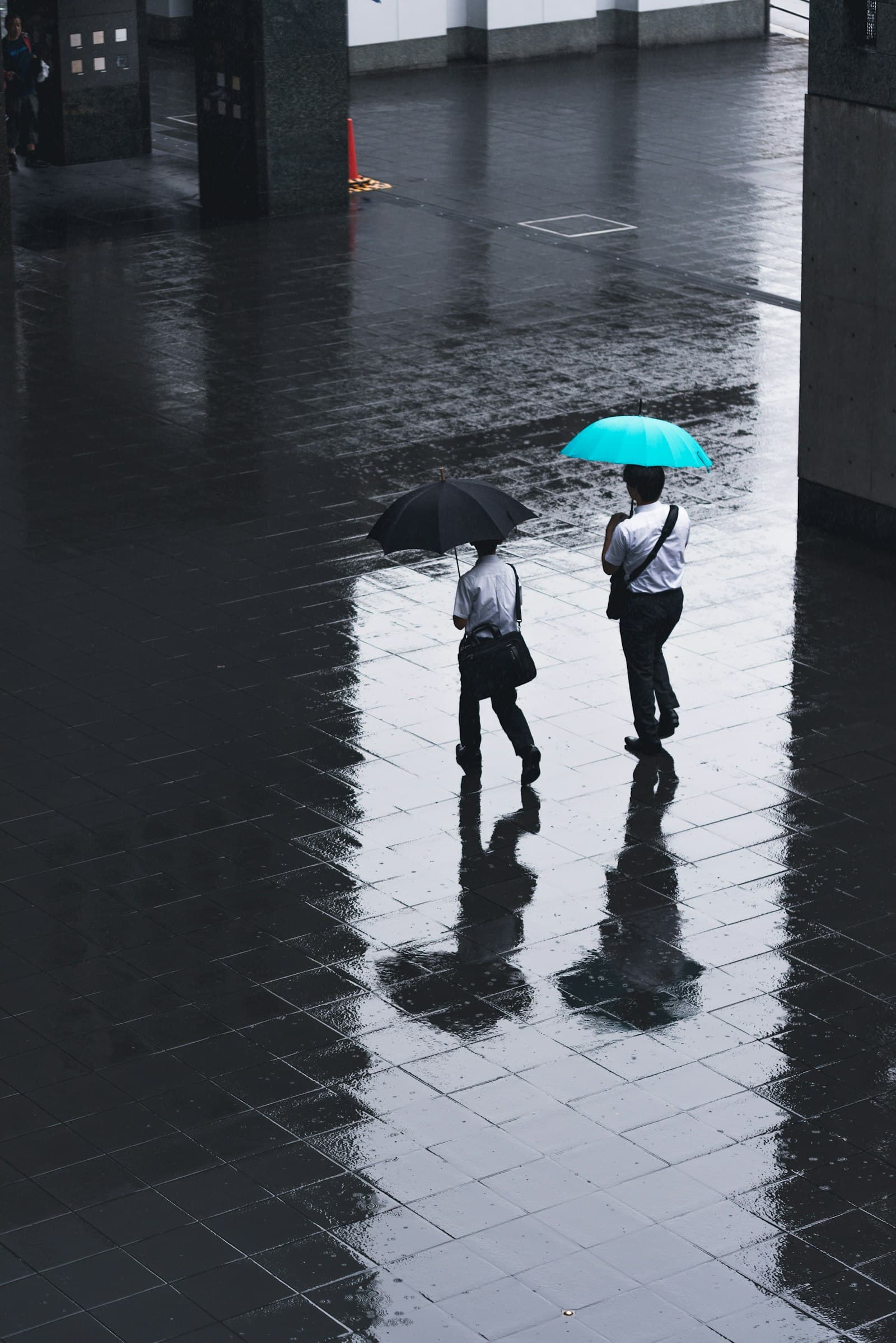
Japan's rainy season is often described as a weather pattern, but the interesting part is how differently people live through it depending on where they are. A wet morning in Shinjuku and a wet morning beside a rice field belong to the same season, yet they ask for different habits.
Why tsuyu feels sharper in large cities
In a major Japanese city, rainy season is experienced through crowd flow. The rain follows people into train stations, convenience stores, office elevators, and narrow restaurant entrances. Clear vinyl umbrellas become part of the landscape because they are cheap, easy to replace, and visually light in crowded streets. The practical question is not simply how to stay dry, but how to move through shared space without dripping onto someone else's shoes or blocking a ticket gate.
That is why umbrella manners become so visible. People close umbrellas before entering the train, point the wet edge downward, place them in plastic sleeves when a store provides them, and often carry small towel handkerchiefs for bags or sleeves. These gestures are small, but in a packed city they reduce friction. Rainy season turns ordinary commuting into a lesson in coordination.
How smaller towns make the rain feel more physical
In smaller towns, tsuyu often feels less like an obstacle course and more like a condition that settles over houses, fields, and roads. The sound of rain on metal roofs, the smell of damp tatami or soil, and the sight of swollen drainage channels make the season feel closer to the ground. Daily planning changes around laundry, grocery trips, school routes, and whether a mountain road or riverside path is still comfortable to use.
The countryside also makes the agricultural side of the season easier to notice. Rice fields need water, but too much rain can complicate maintenance and harvesting schedules later in the year. Hydrangeas bloom along temple paths and neighborhood roads, giving the season a visual identity that is not only grey. In a small town, the rain is not just something falling from above; it is part of how the landscape behaves.
The vocabulary that helps learners remember the season
The Japanese word tsuyu refers to the rainy season, but related vocabulary gives the experience texture. Ame means rain, kasa means umbrella, jimejime describes sticky humidity, and kabi means mold. These words stick better when they are connected to actual situations: a wet umbrella stand outside a cafe, a dehumidifier running in a closet, a laundry rack moved indoors because nothing dries properly.
Learners also notice that weather talk in Japan can be practical rather than decorative. A phrase about humidity or rain is often a way to acknowledge shared inconvenience without turning it into a complaint. That makes tsuyu useful for beginners: it connects simple vocabulary to social tone, which is exactly where real communication starts to feel less abstract.
What the urban and rural contrast reveals
The contrast between city and small-town rainy season shows how Japanese daily life adapts to context. In cities, the season highlights systems: trains, stores, shared corridors, and public etiquette. In smaller towns, it highlights materials and environment: wood, soil, fabric, drainage, insects, and the rhythm of local errands. The weather is the same category, but the cultural cues are different.
For anyone studying Japanese, that difference matters. Culture is easier to remember when it is not treated as one flat national habit. Tsuyu teaches that a word can carry many scenes at once. DarumaGo uses that kind of context because vocabulary becomes stronger when it is tied to a place, a season, and a real behavior.