Kotatsu guide: Why Japan's heated table became the center of home life
A low table with a heater underneath and a blanket on top — the kotatsu turns winter into something soft, warm, and surprisingly social.
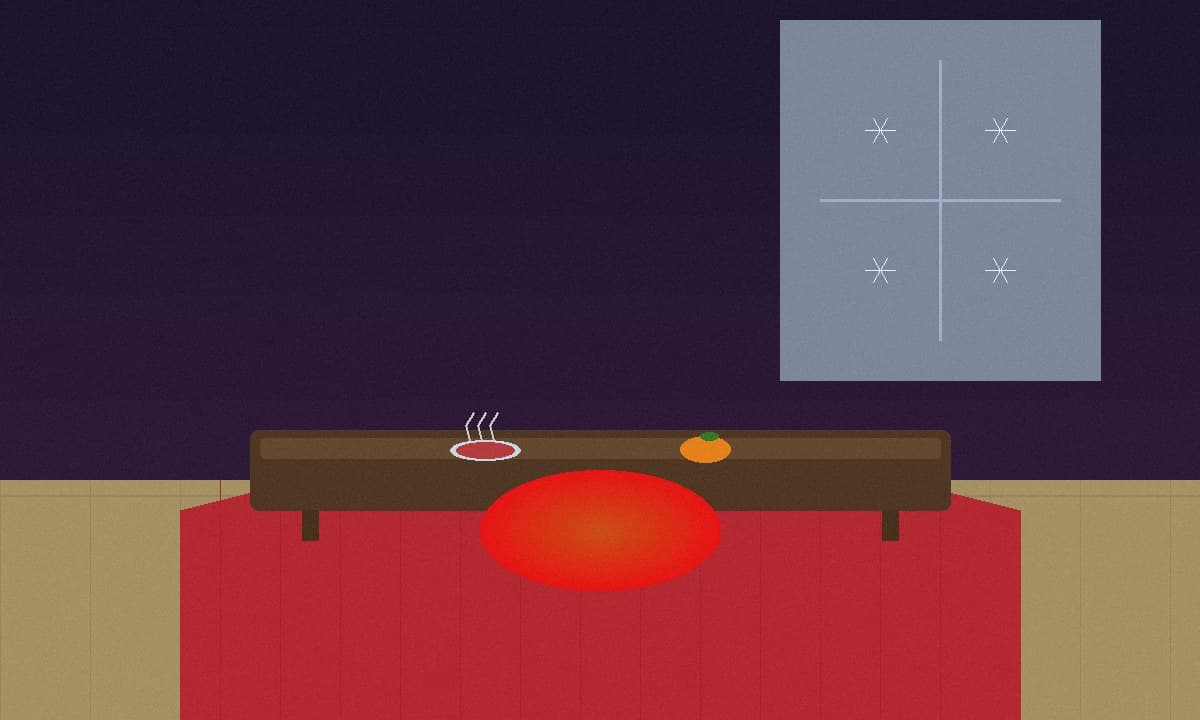
The kotatsu is a table, a heater, and a place to spend the afternoon. Once you sit under it, getting up again requires real effort. That is the point.
How a kotatsu actually works
A kotatsu is a low table with an electric heating element attached to the underside of the tabletop frame. A thick blanket (kotatsu futon) drapes over the entire frame, trapping warm air beneath. A solid tabletop sits on top of the blanket. The whole unit is light enough to move, folds flat for storage in warmer months, and is usually positioned at the center of the main living room.
The heating element runs at low wattage—much less energy than a room heater—because it only warms the small enclosed space beneath the blanket. Sitting inside it feels immediate and personal in a way that central heating cannot replicate. Your legs and lower body are warm while the room around you may be quite cold. In homes that are not well insulated, this is a practical and comfortable solution.
What life around the kotatsu actually looks like
In Japanese households, the kotatsu becomes a gravitational center during winter. Dinner might start at the table, shift into watching a variety program, and end with someone asleep under the blanket. Mikan tangerines are such a classic kotatsu snack that the two are essentially paired in the Japanese cultural imagination—if someone mentions a kotatsu, the image almost always includes a small pile of citrus on the tabletop.
This is not just a domestic detail. It reflects something real about how Japanese families manage cold winters in homes that are built for summer ventilation and often lack the insulation common in northern European or North American houses. The kotatsu is a targeted, low-cost solution that also creates a natural gathering point, which a floor heater or central system does not.
What kotatsu reveals about Japanese home design
Japanese living spaces are often flexible rather than fixed in function. The same room may serve as a living room, dining room, and sleeping area depending on what furniture is moved or folded away. The kotatsu fits this logic perfectly. It defines a center of activity without permanently claiming the room. During warmer months, it disappears entirely.
The preference for low-height furniture—zabuton floor cushions, low tables, futon bedding—connects to tatami rooms and the broader Japanese relationship with floor-level living. A kotatsu placed on tatami, surrounded by cushions, with a paper shoji screen filtering winter light, is a coherent design system rather than a collection of separate items. Learners who understand this flexibility gain a much clearer mental model of how Japanese homes actually function across the seasons.