Japanese garden design: Why it feels calm without trying to impress
How Japanese garden design uses framing, asymmetry, borrowed scenery, and empty space to create calm that feels deliberate rather than decorative.
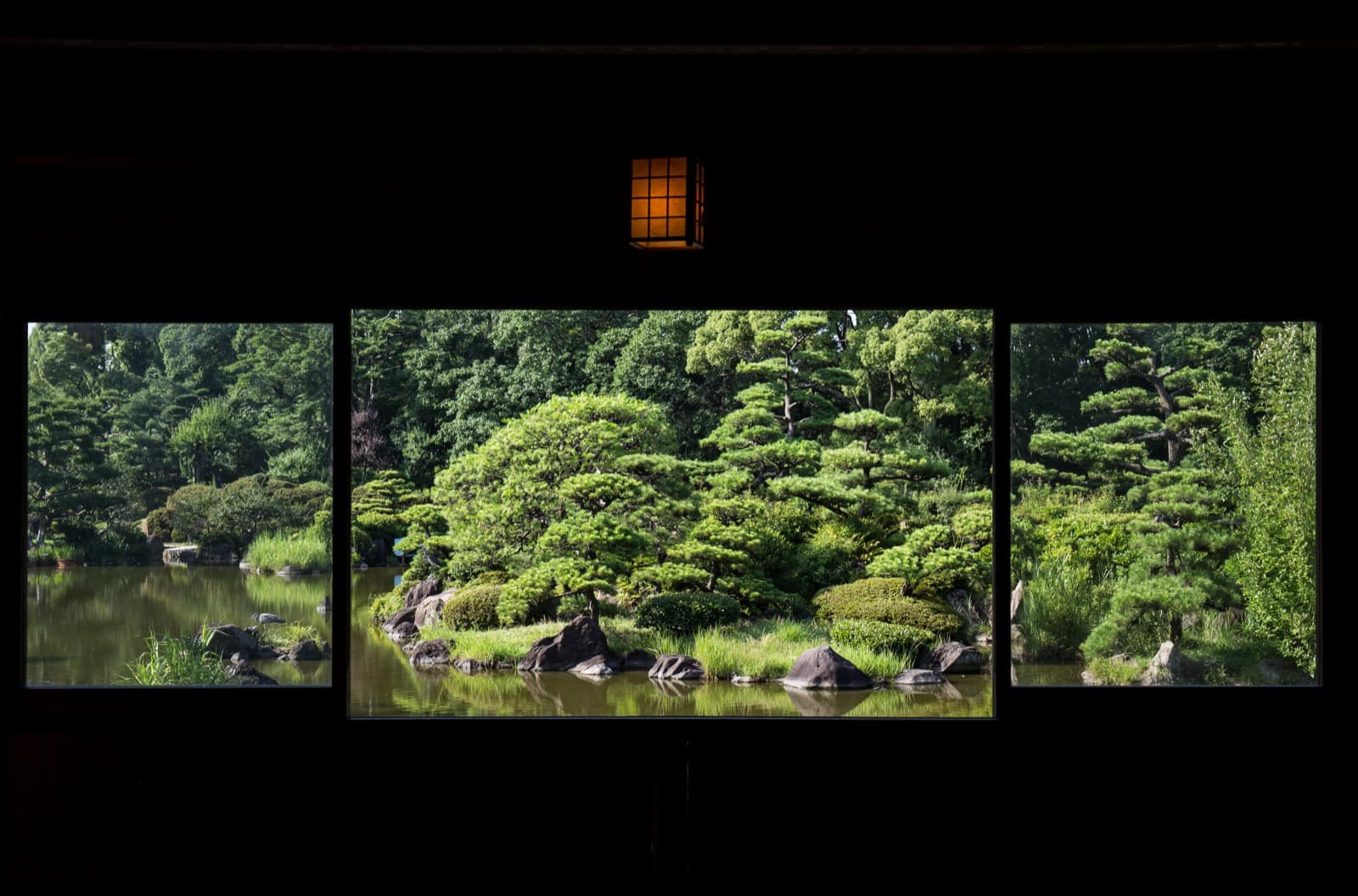
Japanese garden design rarely aims for maximum visual impact all at once. Its power comes from pacing, framing, and the way stone, water, plants, and distance guide the eye without forcing it.
Why the garden never tries to show everything at once
One reason Japanese garden design feels so distinctive is that it rarely aims for immediate total visibility. A path bends, a tree partly screens the pond, or a structure frames one angle while hiding another. The garden reveals itself in stages. That pacing turns looking into a slow activity rather than a quick scan.
This is why the calm feels designed rather than accidental. Attention is guided, but not in a loud way. You are not pushed toward one spectacle. You are invited to notice proportion, distance, and sequence.
How asymmetry and borrowed scenery work together
Japanese gardens often avoid the kind of perfect left-right balance that can feel static. Stones, shrubs, water, and paths are arranged so the scene remains stable without becoming rigid. That asymmetry gives the garden life. It feels composed, but not frozen.
Another important idea is borrowed scenery, where distant trees, hills, or sky become part of the garden's visual field. The boundary of the garden becomes more intelligent than a fence line. Nearby and far away start cooperating.
Why this design language is so memorable
Japanese garden design stays with people because it teaches them how to look. Empty patches of gravel, still water, a bridge, one carefully placed lantern, or a turn in the path all become meaningful once the viewer understands that omission is part of the composition.
That makes the topic especially useful for language learners interested in culture. The garden becomes a place where words about stone, pond, moss, season, and silence stop being abstract. They are attached to a specific visual logic that is easy to recall.