Goshuin book in Japan: What temple and shrine stamps actually mean
Why goshuin feel more meaningful than a souvenir, how the stamp books work, and what the ritual says about travel, devotion, and memory in Japan.
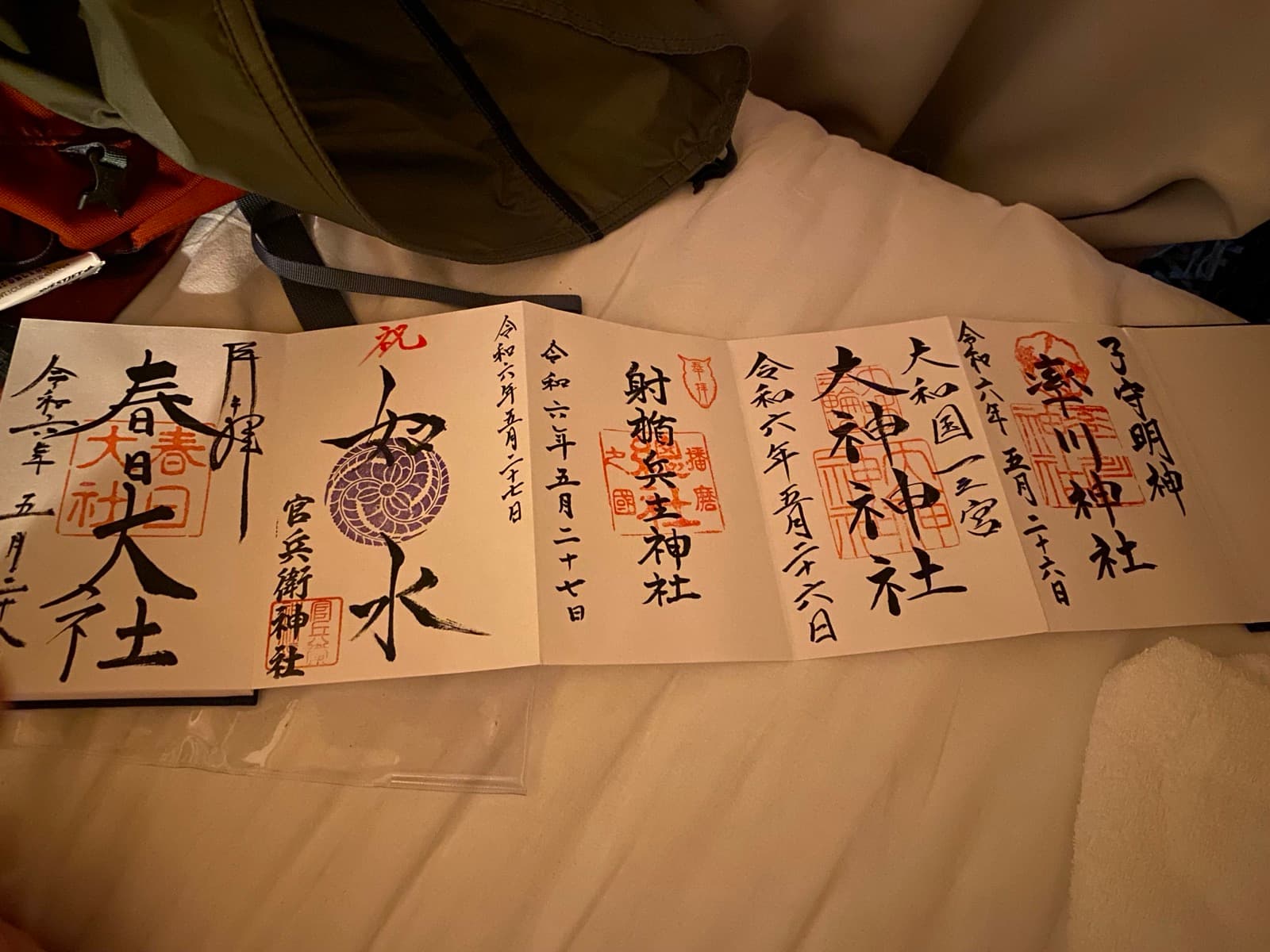
A goshuin book in Japan looks simple at first: a page, a seal, a brush inscription, a date. But the appeal is much deeper than collecting stamps. Each page records a visit in a format that mixes devotion, handwriting, place, and time into one object you can carry with you.
Why a goshuin feels different from ordinary collecting
The easiest way to misunderstand goshuin is to treat them as decorative stamps with no context. In reality, the book belongs to a visit and the visit belongs to a place with its own religious identity, local history, and rhythm. The page becomes meaningful because it marks that encounter in a formal way.
That is why many people describe goshuin as tactile memory rather than tourism merchandise. You do come home with something beautiful, but the beauty is tied to the sequence of shrines or temples you reached, the route you followed, and the act of asking for the inscription at the right moment.
How the ritual usually works
At many temples and shrines, visitors bring a dedicated goshuincho book and present it at a small office or reception window. The book is taken briefly, the calligraphy and seal are added, and a small fee is paid. The process is short, but it feels deliberate because the object is handled with care and the result is not standardized like a printed ticket.
That combination of handwriting, seal, and date explains why goshuin stand out. Even when the destination is busy, the finished page still feels personal. It is a small example of how Japanese ritual often gives ordinary movement through space a clearer emotional shape.
What the custom reveals about travel in Japan
A goshuin book also changes how people move through a trip. Instead of rushing from one famous site to another, you start paying attention to the sequence of stops, the names of the places, and the visual differences in each inscription. The journey becomes easier to remember because each page anchors it.
For learners, that is part of the appeal. Goshuin connect language, place names, religion, and design in one object. They show how Japanese travel culture can turn movement itself into a practice of noticing.